Table of Contents
The 2026 FIFA World Cup starts today. It is the largest tournament in the competition's history, 48 nations, 104 matches, 39 days across three countries. Africa has ten teams in it, the most the continent has ever sent to a World Cup. That number represents the advocacy of two decades, the expanded format argument that African football federations made consistently from the moment the 32-team model was established, the conviction that the continent's 54 nations deserved more than five slots at the game's defining tournament. The argument was eventually heard. The slots were granted. The teams qualified.
The story of how Africa arrived at this tournament, though, contains more than the teams. A Somali referee, named Africa's top official in 2025 and selected by FIFA to officiate matches at the World Cup, was denied entry at Miami airport last week. He had a valid US visa. He is back in Istanbul. The Senegal national team was subjected to security checks on the airport tarmac when they landed in the United States on Monday. Fans from Algeria, Senegal, Ivory Coast, Tunisia, Ghana, and Cape Verde face a tournament where the travel restrictions introduced by the Trump administration have made attending matches in the United States close to impossible. A reporter asked FIFA president Infantino directly, in a Nairobi press conference, whether Africans would be safe and welcome at this World Cup. His answer did not resolve the question.
What the Players Carry
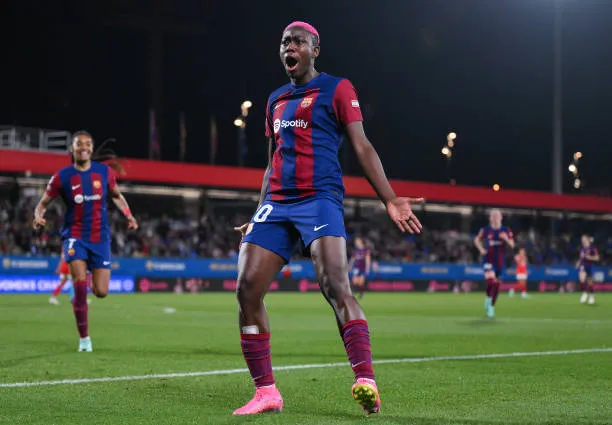
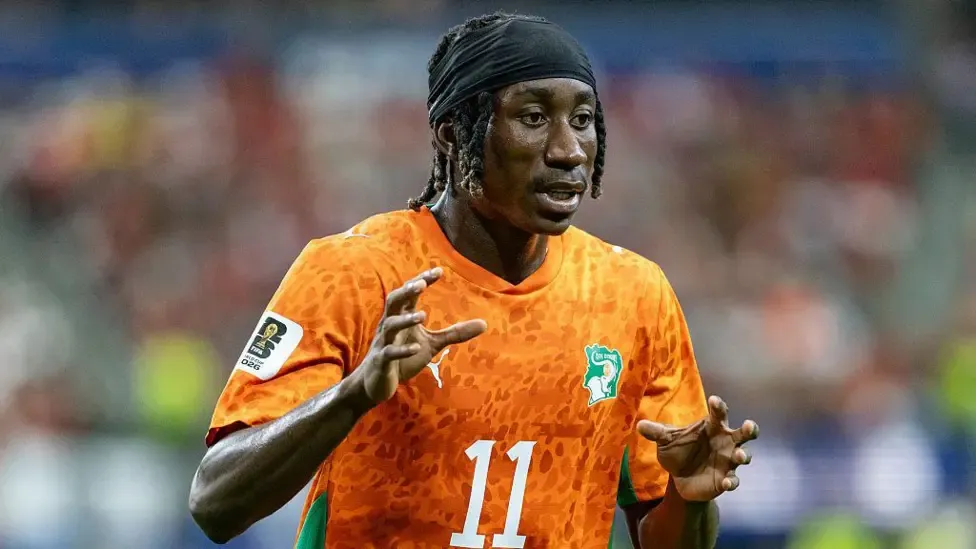
Against all of that, the players are here. Kalidou Koulibaly, who declared himself fit after a six-week injury recovery, will lead Senegal against France on June 16. Mohamed Salah, who ended his Liverpool career in April and arrives at what he has called his last World Cup, plays for Egypt against Belgium on June 15. Achraf Hakimi, who won the Champions League with PSG ten days ago, is in Morocco's squad for their match against Brazil on June 13. Brayan Leon, who scored five goals as Sundowns won the CAF Champions League, plays for Colombia rather than Africa, but the continent produced the conditions for his emergence. The African football ecosystem, clubs, academies, national teams, the infrastructure of the game across 54 nations, is represented in these squads at a level it has never been before.
Relebohile Mofokeng is 21 years old. He won the Betway Premiership with Orlando Pirates two weeks ago. Today he will play at the Estadio Azteca in front of 80,000 people in the match that opens the biggest tournament in football history. He has never experienced anything close to this. He is South African. He will be representing his country at a World Cup for the first time. That is the human story that sits behind every governance failure, every tarmac incident, every visa restriction. Players who earned their place through talent, work, and the football infrastructure of their continent, now standing in stadiums where the whole world watches.
The Opportunity Africa Has Never Had Before
Ten nations means ten chances. In the 32-team World Cup, five African nations produced five group stages, and the best result was Morocco's semi-final in 2022. A 48-team format with 26 knockout spots changes the arithmetic fundamentally. More African nations can reach the round of 16. More African nations can face each other in the knockout stage. The possibility of two or three African nations in the quarter-finals, something that has never happened, is not a fantasy in a tournament where the group stage is more forgiving and the bracket is more open.
What that opportunity demands is performances that the continent's preparation has not always guaranteed. Ghana are winless in six. Tunisia lost 5-0 to Belgium. Nigeria's coach has been consistent rather than inspired. The gap between having the slots and using them is where African football has historically struggled at World Cups. Morocco in 2022 showed what was possible. The question this tournament poses is whether 2022 was the beginning of a pattern or the exception that proves the longstanding rule.
The Measure of This Moment
The Al Jazeera opinion piece that cut through the pre-tournament noise most clearly was written in May, before a ball was kicked. It made a specific point: in 1964, Ghana's director of sport Ohene Djan, backed by President Nkrumah, sent a telegram to FIFA objecting to the unfair World Cup allocation for Afro-Asian countries. The protest was heard. The allocation changed. African football's voice has always been raised toward equity. This tournament is, in the most direct sense, the product of that advocacy.
CAF has been largely silent about everything that has happened to African participants at this tournament, from the travel ban to the tarmac to the referee turned back at the airport. The silence, noted by multiple commentators and directly challenged in Al Jazeera's coverage, is its own kind of statement about the institution's priorities. But the players are not silent. They are here. South Africa kicks off in hours. Ten African nations begin today. The continent's biggest World Cup, with all its contradictions and all its possibilities, starts at the Azteca this afternoon.