Table of Contents
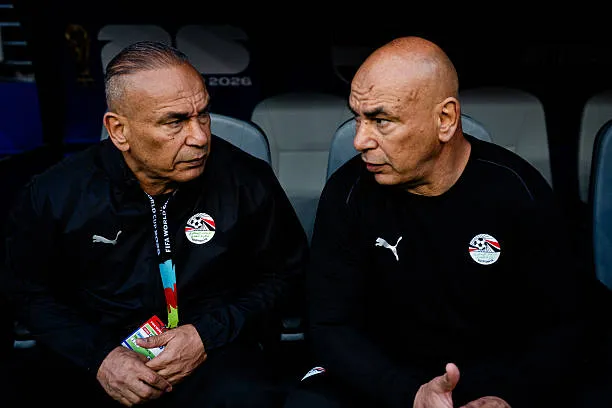
On the afternoon of a match at Cairo International Stadium, with the Egyptian national team preparing in the tunnel, the head coach and the team director walk out side by side. They are the same height, the same build, the same face. Hossam Hassan and Ibrahim Hassan are 59 years old and identical twins, and they have been standing next to each other at football matches since 1975, when they first joined Al Ahly's youth academy as nine-year-olds. The fifty years between that first session and today's dugout contain the most decorated brotherhood in the history of African football. Nobody else in the game has produced anything close to what they produced together. The Guinness World Records confirm it: 311 combined international appearances for Egypt. A number that belongs to two people who share the same birthday, the same face, and the same refusal to be separated by anything football ever placed between them.
Helwan: Where It Started
The twins were born on August 10, 1966, in Helwan, a district on the southern edge of Cairo that sits along the Nile and has historically been home to the city's industrial working class. Football in Helwan in the late 1960s and 1970s meant street pitches, communal spaces, and whatever equipment could be assembled. Hossam and Ibrahim played together before they understood they were good. They joined Al Ahly's academy in 1975, which placed them inside the institution that would define the majority of their professional lives. Al Ahly is not simply a football club in Egypt. It is the most supported sporting institution in Africa, with a membership base of millions and a trophy cabinet that has no equal on the continent. To arrive there as a nine-year-old from Helwan and to stay for the better part of two decades is to compress an entire football education into one address.
Hossam turned professional first, making his senior debut for Al Ahly in 1984. Ibrahim followed the same year. They played their first competitive match as professional teammates within months of each other, at 17 years old, for the same club in the same city where they had grown up together. That synchrony was not coincidental. It was deliberate. Over the years that followed, every major career decision the twins made was negotiated with the other in mind. When Hossam received an offer from Sporting Lisbon in the early 1990s that would have made him one of the highest-paid African players in Europe at the time, he turned it down. He turned it down because Ibrahim was not included in the deal. He stayed at Al Ahly instead. The decision cost him the European career. He did not appear to regret it.
Al Ahly, PAOK, and the European Window
In 1990, both brothers moved to PAOK in Greece for a single season, then to Neuchatel Xamax in Switzerland for another. The European experiment was brief, modest in terms of club profile, and significant in one specific sense: it confirmed that the twins would only move together. The Sporting Lisbon offer to Hossam alone had already established that principle. Europe in the early 1990s was not routinely scouting African talent at the depth required to identify two brothers simultaneously, and the clubs willing to sign one were rarely willing to extend the logic to the pair. Xamax and PAOK did. Every club that came after with individual offers found the same answer: not without Ibrahim.
They returned to Al Ahly in 1992 and stayed until 1999. Seven years, a combined catalogue of Egyptian Premier League titles, CAF Champions League trophies, and the daily reality of playing alongside your twin at the club you both joined as children. The familiarity they had on the pitch was not a tactical construct. It was the product of thirty years of knowing exactly how the other person moved before they moved. Hossam, the striker, built his goal record partly on Ibrahim's delivery from right back: the timing of the runs, the arrival of the cross, the relationship between what one needed and what the other provided. They had been running those combinations since they were children in Helwan. By the time they were doing it in an Al Ahly shirt in the Egyptian league, it was less a partnership than a shared instinct.
The International Record and What It Contains
Hossam Hassan represented Egypt from September 10, 1985 to February 7, 2006 — a span of more than twenty years. He earned 178 caps across that period, making him the second most-capped player in international football history at the time of his retirement. He scored 69 goals for Egypt, a national record that Mohamed Salah has since approached but has not yet broken. He won the Africa Cup of Nations three times: 1986 on home soil in Egypt, 1998, and 2006, when he was part of the squad as a veteran presence in his fortieth year. He captained Egypt to the 1998 and 2006 titles, lifting the trophy twice as skipper. At the AFCON level specifically, his goal tally in the competition exceeded those of Sadio Mane, Mohamed Salah and Riyad Mahrez, and matched Didier Drogba's total in fewer appearances.
Ibrahim's international record runs from 1988 to 2002. One hundred and thirty-one caps across fourteen years as a right back whose attacking instincts complemented his defensive solidity. He participated in the 1990 FIFA World Cup in Italy, Egypt's only World Cup appearance until the late 2000s, and won the 1998 AFCON with his brother. He was named to the FIFA World XI three times during his international career, a distinction that placed him among the most recognised defenders in world football across that period and that remains, to date, the highest individual global recognition an Egyptian defender has received. The 311 combined caps the twins accumulated across their international careers is a Guinness World Record. No two brothers in the history of international football have come close to it.
Zamalek, the Derby, and the Final Club Years
In 1999, both brothers made the move that Egyptian football considers its most loaded decision: they crossed Cairo to sign for Zamalek. In a country where the rivalry between Al Ahly and Zamalek is not simply a sporting contest but a social division that runs through family dinner tables and workplace friendships, leaving one for the other carries a specific weight. The Hassan twins did it together. They won the CAF Champions League with Zamalek in 2002, the CAF Super Cup and the Arab Unified Club Championship in 2003. Hossam continued playing until 2008, his final season at Al Ittihad Alexandria at the age of 41. Ibrahim retired from playing in 2006 after a period at Al Masry. Between them, across club and country, they had played competitive football for a combined span of approximately 46 years.
The Dugout: Together Again
In February 2024, the Egyptian Football Association made a joint appointment that had a specific logic and a specific symbolism. Hossam Hassan became head coach of the Egyptian national team. Ibrahim Hassan became national team director. They had never been professionally separated for any sustained period across five decades of football. They were not separated now.
Hossam has managed across a wide range of Egyptian clubs since retiring as a player: Zamalek, Ismaily, Al Masry, the Jordan national team, Pyramids, Smouha, Al Ittihad Alexandria. His managerial record is characterised by intensity, direct communication, and the occasional controversy that follows a man whose playing career was equally charged. He is not a quiet coach. He is not a coach who holds press conferences where nothing is said. At AFCON 2025 in Morocco, speaking to the media in Agadir before Egypt's group matches, he argued publicly against the four-year AFCON cycle with the authority of a man who played 178 times for the country that has won the tournament a record seven times. That argument, and the composure with which he made it, was noted.
Egypt's women's side conceded six goals to Zambia in the WAFCON 2026 group stage last week. Hossam's Egypt men's team was eliminated by Argentina at the 2026 World Cup after leading 2-0 with eleven minutes to play. The late-game management question that has followed African football across multiple tournaments is one the twin who now coaches the continent's most historically successful national team will need to answer. Ibrahim sits beside him in the technical area at every match. They are 59 years old, identical, and still working from the same address. They have been doing it since 1975. The football keeps changing around them. The partnership does not.