Table of Contents
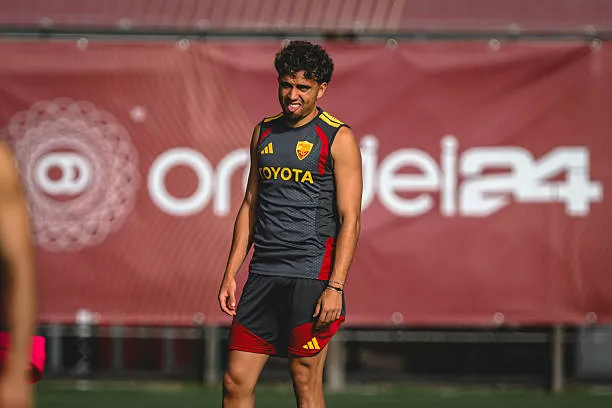
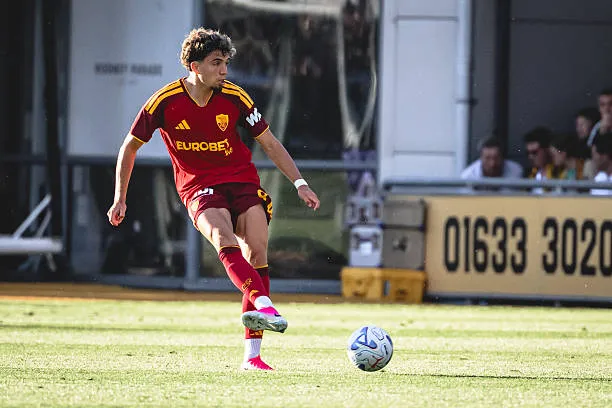
Neil El Aynaoui did not start the summer as a household name outside Morocco and Serie A. He started it as a 25-year-old midfielder in his debut season at AS Roma, a player who had impressed in 34 appearances for the Giallorossi but had not yet produced the volume of output that forces European clubs into bidding wars. Then the 2026 World Cup began, and Morocco's quarter-final run gave El Aynaoui five matches in front of the largest global football audience of the year. He started all five. He was, according to Unai Emery's sporting director at Aston Villa, the player the manager wanted signed above all others. Eight clubs from one league were monitoring him. Barcelona and Real Madrid had shown interest. Roma, holding a five-year contract signed only twelve months ago, were asking £34.2 million. The World Cup, again, had done the work that a full club season had not.
The mechanics of how this happens are worth understanding clearly, because El Aynaoui is the third African player in this summer window, after Issa Diop and Vozinha, whose market value was materially rewritten by six weeks in North America. Diop signed for Ipswich. Vozinha signed for Colo Colo. El Aynaoui has not signed for anyone yet, and the reason is that his situation is structurally more complicated: he has a five-year contract at a club that finished third in Serie A and qualified for the Champions League, a club that does not need to sell and holds significant leverage in any negotiation. The World Cup created the demand. Roma's contract structure controls the supply.
What El Aynaoui Produced at the World Cup
The data from Morocco's campaign is specific and worth stating precisely. El Aynaoui started all five matches across the group stage and knockout rounds. His pass completion rate across the tournament was 92.3 percent. He attempted seven shots, with two on target. He recorded 535 touches across the five matches, including seven in the opposition penalty area. He made 38 defensive actions: 18 tackles, seven interceptions, one blocked shot and 12 clearances. He won 45.5 percent of his aerial and ground duels. Morocco reached the quarter-finals before losing to France. El Aynaoui was the engine of their midfield across every minute they played.
The profile that data describes is a midfielder who does both jobs at the level required for sustained Champions League football: he presses and recovers defensively, he connects and progresses offensively, and he does it at a pass completion percentage that only technically excellent players sustain across a full tournament. Emery's specific interest makes tactical sense for a Villa side that lost Youri Tielemans to Manchester United for 42 million euros and needs a midfield replacement who can operate in a high-intensity pressing system. El Aynaoui, raised at Nancy, developed at Lens in Ligue 1, and finished at Roma in Serie A, has spent his entire career learning to function under exactly that kind of structural demand.
The Roma Constraint and the Negotiation Landscape
The obstacle is Roma's leverage. El Aynaoui signed a five-year contract at the Stadio Olimpico in July 2025, which means he has four years remaining on a deal that the club negotiated precisely to protect their asset value. Roma have already made clear they are not obliged to sell and will not accept a fee below their valuation. The £34.2 million price tag reported across Italian and African football media reflects not just El Aynaoui's market value as established by the World Cup but the premium a selling club commands when it holds a long-term contract and a Champions League platform for the player to remain on. El Aynaoui can develop at Roma next season in the Champions League and be worth more in twelve months. Roma know this. It is their primary negotiating position.
For Villa, the competitive pressure is significant. Chelsea, Liverpool, Manchester United, Brighton, Bournemouth, Newcastle, Sunderland and Everton have all been linked, with Everton reported to hold a specific advantage through a personal connection between the player's representatives and the club. Barcelona and Real Madrid have shown interest but have not submitted formal bids. The Premier League clubs collectively represent a salary level Roma cannot match, which is the lever El Aynaoui's representatives will use if the player decides he wants to move. Whether he wants to move, and whether Villa's offer clears Roma's £34.2 million threshold, are the two variables the next two weeks will resolve. The transfer window closes at the end of August. Sport Blot will carry the confirmation of any deal as soon as it lands.
The Broader Pattern: What This Summer Has Shown
El Aynaoui, Diop, Vozinha and the broader cluster of African players whose transfer value moved materially following the 2026 World Cup represent the clearest evidence yet of a structural shift in how the global transfer market prices African talent. The World Cup, held in North America with the largest broadcast distribution in the tournament's history, gave African players a shop window of unprecedented scale. Ten African nations participated. Nine reached the knockout stage. The individual performances generated across those matches, viewed by audiences on Channel 4, DAZN, beIN Sports and Apple TV simultaneously, compressed the scouting and valuation cycle from months to weeks. El Aynaoui went from a Roma squad player with 1,703 Serie A minutes to Aston Villa's stated top priority inside the length of a World Cup campaign. That compression is not an accident of circumstance. It is the consequence of African football performing at a level that the broadcast infrastructure finally allowed the world to watch in full.