Table of Contents
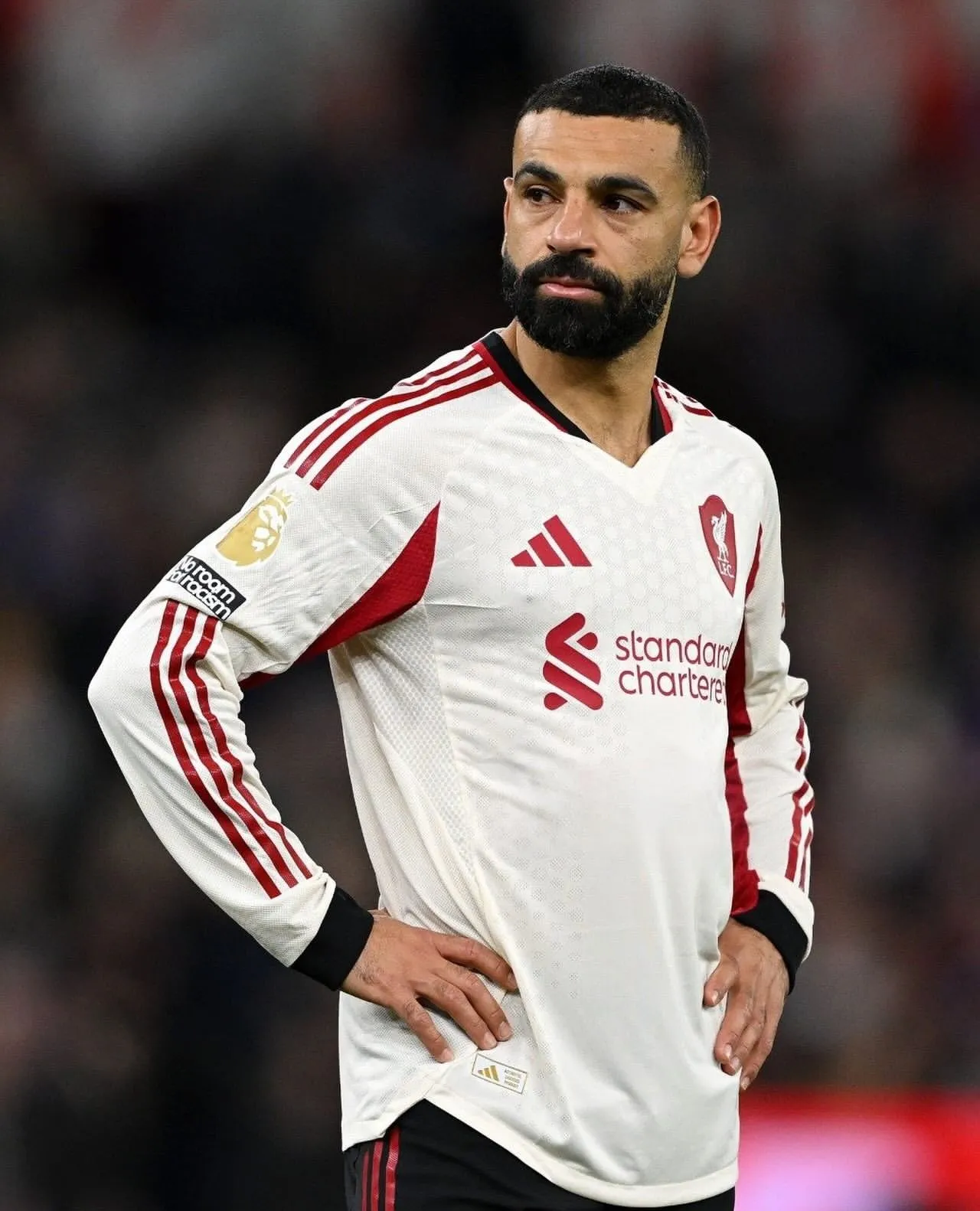
In the 59th minute of Liverpool's 3-1 win over Crystal Palace on April 26, Mohamed Salah touched the back of his left leg, looked briefly toward the bench, and walked off the pitch. The Anfield crowd rose. He applauded all four sides of the stadium. Supporters inside understood what the rest of the football world was about to confirm: that the final chapter of one of Liverpool's greatest careers had ended not with a title lift or a farewell goal but with a grimace and a substitution nobody wanted to see.
Egypt national team director Ibrahim Hassan confirmed the diagnosis within days. A hamstring tear. Four weeks of treatment. Liverpool's season ends on May 24. Salah will not play for the club again. Nine years, 257 goals, and a record of sustained excellence that the Premier League has rarely seen from any player ends on a treatment table rather than a stage. The farewell he deserved did not arrive.
The question that matters for African football now is not how his Liverpool story ended. It is whether he arrives at the 2026 World Cup in condition to write something new.
The World Cup Timeline
The tournament kicks off on June 11. Egypt open their Group G campaign against Belgium in Seattle on June 15. From the date of injury on April 26, a four-week recovery brings Salah to approximately late May. That leaves two to three weeks to rebuild match sharpness before the biggest tournament Egypt have qualified for in years. Hassan was unambiguous on the World Cup question. "His injury will not affect his participation in the 2026 World Cup," he told Reuters, as reported by Goal, Fox Sports, and World Soccer Talk. Egypt have a friendly against Brazil in Cleveland on June 6 that will serve as the final fitness test before the tournament proper.
Liverpool, for their part, confirmed in a club statement that Salah was "expected to be available to play again before the end of this season," suggesting the door was open for a final appearance at Anfield against Brentford on May 24. Whether that materialises or whether the medical staff manage the risk carefully, given the World Cup proximity, is the decision Salah, his doctors, and Egypt's federation must make in the coming days.
What This World Cup Means for Egypt
Egypt missed the 2022 World Cup entirely. Before that, their only appearance in recent decades was 2018 in Russia, where Salah arrived carrying a shoulder injury from the Champions League final and Egypt lost all three group matches. The record is stark: Egypt have never won a World Cup match across seven attempts stretching back to 1934 and 1990. Group G this summer, with Belgium, New Zealand, and Iran, is the most achievable qualifying draw Egypt could have hoped for. A fit Salah against that group is a different proposition from an Egypt side managing his fitness carefully or carrying him through fixtures he cannot fully influence.
Salah is 33 years old and turns 34 three days after the tournament starts. This is almost certainly his last World Cup. The symmetry with 2018 is uncomfortable: another injury, another race to be fit, another group where Egypt need him at his best to progress. Arne Slot told the BBC that Salah's decision to leave the pitch immediately against Palace said something in itself. "We all know Mo and how hard it is for him to leave the pitch. For Mo to leave the pitch, that tells you something." A player who has taken exceptional care of his body across a decade of elite football, as Slot acknowledged, gives Egypt reason to believe the recovery will be managed properly. But the margin is tight.
The Larger Picture
Salah's injury closes one of African football's greatest individual stories at club level and opens an uncertain final chapter on the international stage. He is the continent's most decorated player in the Premier League era, the benchmark against which every discussion of African football's place in the global game is measured. Heading into a World Cup where ten African nations compete for the first time, his presence and fitness matters beyond Egypt. He is the face of the expanded African contingent's ambition. A Salah who arrives in North America healthy and sharp, at a tournament where he has everything still to prove and nothing left to lose at club level, is a player who could define how the world remembers African football's 2026 summer. The countdown has started.