Table of Contents
The first half told one story. The second half told another. Canada pressed Morocco for 45 minutes, frustrated the Atlas Lions with a relentless high press that prevented them from building rhythm, and created the best chance of the period through Tani Oluwaseyi, whose close-range effort was turned aside brilliantly by Yassine Bounou. The scoreline was goalless at half-time. Then Azzedine Ounahi scored in the 50th minute and Morocco were somewhere Canada could not follow.
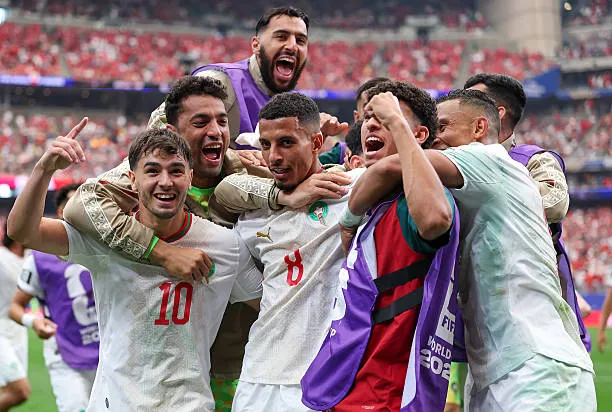
Hakimi received the ball on the right, cut back crisply, and found Ounahi arriving at pace. The Girona midfielder spun a low ball through traffic and a teammate's legs to beat Maxime Crepeau. <cite index="21-1">Morocco's second half was clinical on the counter, and Ounahi effectively sealed the result with a composed strike in the 82nd minute</cite>, as NBC Sports confirmed. Brahim Diaz then set up substitute Soufiane Rahimi deep in stoppage time for the third, with Diaz's assist his fourth of the tournament, a new record for an African player in a single World Cup.
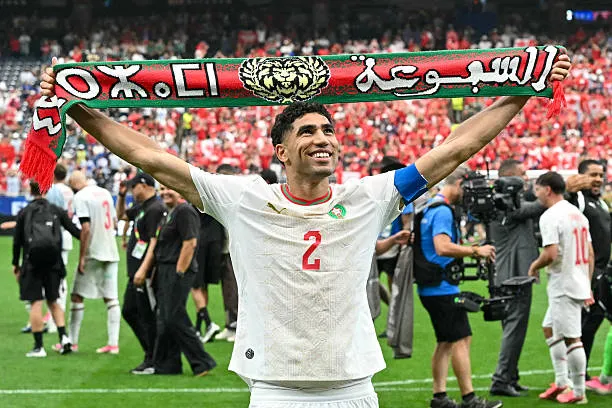
Morocco are in the quarter-finals. They will face France in Boston on July 9, a rematch of the 2022 semi-final that ended Morocco's run in Qatar 2-0. The same stage. The same opponent. A different result is the only thing that would complete the most sustained World Cup run any African nation has produced in the history of the competition.
The Saibari Concern
Ismael Saibari, a star of the tournament and a new Bayern Munich signing, is a huge part of Morocco's World Cup and he was replaced by Soufiane Rahimi after an injury in the first half, as NBC Sports reported. The specific nature of his injury has not been confirmed but his early withdrawal was enough to concern the Moroccan bench visibly. Saibari had scored the decisive penalty against the Netherlands in the round of 32 and had been one of the tournament's most consistent attacking contributors across the group stage. If he is unavailable for Thursday's quarter-final against France, Ouahbi will need to reorganise an attack that has been built in significant part around Saibari's movement and finishing.
Rahimi, who replaced him and scored the third goal, offers a different profile: more direct, less technically sophisticated in combination play, but dangerous in the specific moment of the counter-attack that Morocco's system creates. Whether he can provide sufficient cover for Saibari against a French defensive line that will have studied this Morocco side in more detail than any previous opponent is the tactical question that Thursday's selection will answer.
Eight Matches Without Defeat
Morocco's run now stands at eight consecutive World Cup matches without defeat, stretching across two tournaments. They drew with Brazil and Scotland, beat Haiti, beat the Netherlands on penalties, and now beaten Canada by three goals. The only blemish on the record at this tournament was a goalless first half against a Canadian side that, to their credit, matched them for organisation and intensity before the second half changed everything.
Morocco will now play France, who defeated Paraguay 1-0 on Saturday evening, in a quarterfinal match in Boston on July 9, as CBC confirmed. It is the fixture African football has been pointing toward since Morocco's semi-final loss to France in Doha in December 2022. In Qatar, France won 2-0. Two years later in Boston, with the same Moroccan squad largely intact but with a new coach and three more knockout matches of tournament experience behind them, the question the quarter-final poses is whether Morocco can do something to France that no African nation has ever done at a World Cup: eliminate the tournament favourites in the knockout stage.