Table of Contents
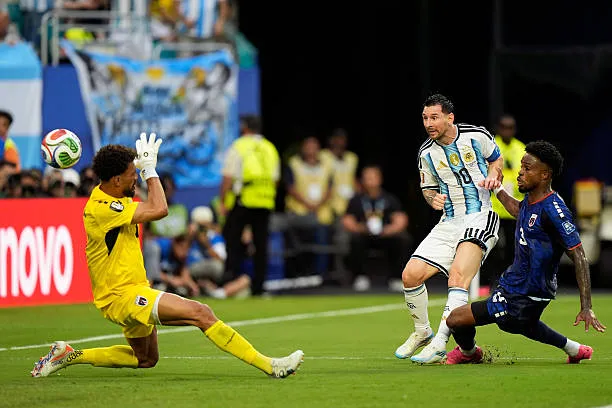
Messi spurned a one-on-one in the opening minutes. Cape Verde organised, absorbed, and closed down. The Hard Rock Stadium held 65,000 people, the overwhelming majority supporting Argentina, and for long stretches of the evening the world's best team could not find a way through the most defensively compact side remaining in the tournament. Messi finally scored in the 29th minute from the kind of finish that ends matches. Deroy Duarte equalised for Cape Verde in the second half from a moment of Vozinha-launched counter-attack. The match went to extra time. Then Sidny Lopes Cabral hit the goal of the tournament.
In the 103rd minute of the match, the second minute of the first period of extra time, Cabral received the ball on the left side of the box at a tight angle, with an Argentine defender closing fast. He opened his body and curled a right-footed finish around Emi Martinez into the far corner. The goalkeeper got both hands to it. It was not enough. Cape Verde, against Argentina, in the World Cup round of 32, were leading 2-1 in extra time. The small Cape Verdean contingent in the stadium produced a noise disproportionate to their numbers. For six minutes, this was the story of the entire tournament.
How Argentina Won It
Lisandro Martinez had already given Argentina their second-period extra-time lead with a stunning near-post finish from a corner before Cabral's equaliser arrived. What eventually settled the match came from another set piece. <cite index="17-1">Cristian Romero rose highest to flick home a Messi corner into goal via Diny Borges' arm, giving Argentina the lead for a third and final time</cite>, as ESPN described it. The handball element of the decisive goal added the particular bittersweet quality that defines Cape Verde's tournament at every level: almost enough, never quite sufficient, producing moments of extraordinary quality against opposition that ultimately had too much.
What Cape Verde Leave Behind
The exit was not a failure. The entire Cape Verdean World Cup was not a failure. A nation of 530,000 people, appearing at their first tournament, advanced from the group stage unbeaten, drawing with Spain, Uruguay, and Saudi Arabia. They held Argentina to extra time with a goal that, in different circumstances with a different set of final-minute decisions from the officials, could have produced the most extraordinary result in World Cup history. <cite index="17-1">Vozinha became the viral sensation of the competition when he denied a star-studded Spain side in the islanders' opener</cite>. Cabral's curler in Miami will join that save in the permanent record of what this generation of Cape Verdean football achieved.
Jose Pina built something at this tournament that should not be dismantled. The defensive identity, the collective discipline, the understanding of how to organise against individually superior opponents — all of it was produced with a squad built largely from players in the Portuguese football system and one 40-year-old goalkeeper from the second division. The round of 32, in their debut World Cup, against the defending champions. The fairytale, as ESPN's preview put it diplomatically, has come to an end. The story it produced will not.