Table of Contents
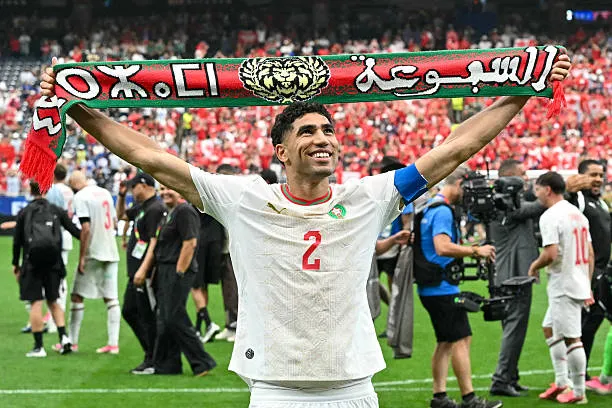
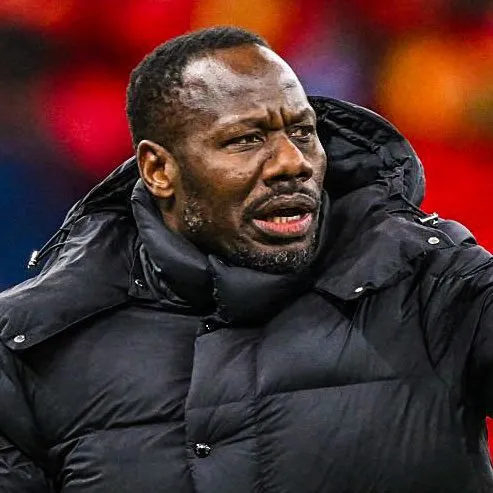
The AFCON 2025 final is not finished. Months after the incident at the Prince Moulay Abdellah Stadium in Rabat, the disciplinary consequences have now been formally confirmed. CAF has fined Senegal head coach Pape Thiaw and suspended Morocco captain Achraf Hakimi following the events of the final that were contested, appealed, and are still subject to a Court of Arbitration for Sport ruling on the administrative question of who holds the title. The individual sanctions, reported by Fox Sports and confirmed across multiple sources, arrive in the week that several of the players involved depart for the 2026 FIFA World Cup.
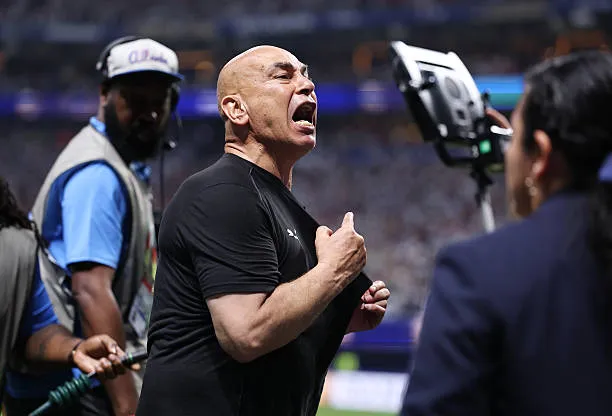
The specific details of the Thiaw fine and the Hakimi suspension have not been fully disclosed in CAF's public communications, which is consistent with the governing body's approach throughout this dispute: formal statements that confirm decisions without providing the full reasoning that would allow external scrutiny of whether the sanctions are proportionate. What is confirmed is that Thiaw, who led his players off the pitch in protest at the referee's decision to disallow a Senegalese goal and award Morocco a penalty in the 90th minute, has been sanctioned for that decision. Hakimi, Morocco's captain, has received a suspension whose length and scope carries implications for his availability at the start of the World Cup.
The Timeline of the Incident
The sequence at the final is now well-documented. In the closing stages of the match, Congolese referee Jean-Jacques Ndala disallowed a Senegalese goal and awarded Morocco a penalty. Thiaw led his players off the pitch. The walkout lasted approximately 17 minutes before Sadio Mane persuaded his teammates to return. Brahim Diaz attempted a Panenka and Edouard Mendy saved it. Pape Gueye scored in extra time. Senegal celebrated. CAF subsequently ruled that Article 82 of their regulations, which treats a team's refusal to play as a forfeited match, had been breached. Morocco were declared champions. The CAS appeal from Senegal is ongoing.
The sanctions against Thiaw and Hakimi sit alongside that administrative ruling rather than replacing it. Thiaw's fine addresses his conduct as the coach who ordered the walkout. Hakimi's suspension, as Morocco captain, appears to relate to his conduct during the protest period, though CAF has not specified the precise basis. Both men are now subject to disciplinary consequences from a match that is simultaneously subject to a CAS appeal that could alter the official record of who won it.
The World Cup Timing
Hakimi's suspension is the more immediately consequential of the two sanctions. The Inter Milan full-back is one of Morocco's most important players, their captain, and a figure whose attacking output from right-back has been central to Walid Regragui's system and, following Regragui's resignation, will be central to whatever Morocco's new coach builds around the existing squad. If the suspension covers the opening weeks of June, it creates a question about his availability for Morocco's first group match at the World Cup.
Morocco are in Group F alongside Portugal, Uruguay, and the United States, with their opening fixture on June 12. A suspension that was issued in late May and runs for a defined number of days or matches in international competition could theoretically affect that game. CAF has not clarified whether the suspension applies to CAF competitions only or to FIFA competitions as well, which is a distinction that FIFA's own regulations govern. The practical implication for Morocco's World Cup preparation is a question that will be resolved by the federation's lawyers and FIFA's compliance team in the days ahead.
What It Means for the Bigger Picture
The individual sanctions confirm something that the administrative ruling alone could not: CAF is treating the events of the AFCON final as a disciplinary matter that goes beyond the question of which team holds the trophy. That framing has consequences for how the dispute is perceived as it continues through the CAS process. If CAS rules in Senegal's favour and restores their title, the individual sanctions against Thiaw and Hakimi exist in a strange position: the walkout that prompted them was a response to a decision that, in the CAS verdict, may be found to have been wrongly made.
Pape Gueye said weeks ago that the squad would not return their medals. Idrissa Gana Gueye called the CAF ruling ridiculous. The AFCON 2025 dispute has never been a clean administrative matter. It has been a contested football event in which the officiating, the regulations, the governing body's response, and now the disciplinary consequences have all been questioned by one of the parties involved. The CAS verdict will eventually settle the administrative record. Whether it also settles the legitimacy question in the minds of the players and supporters who experienced the final is a different matter, and no suspension or fine will resolve it.