Table of Contents
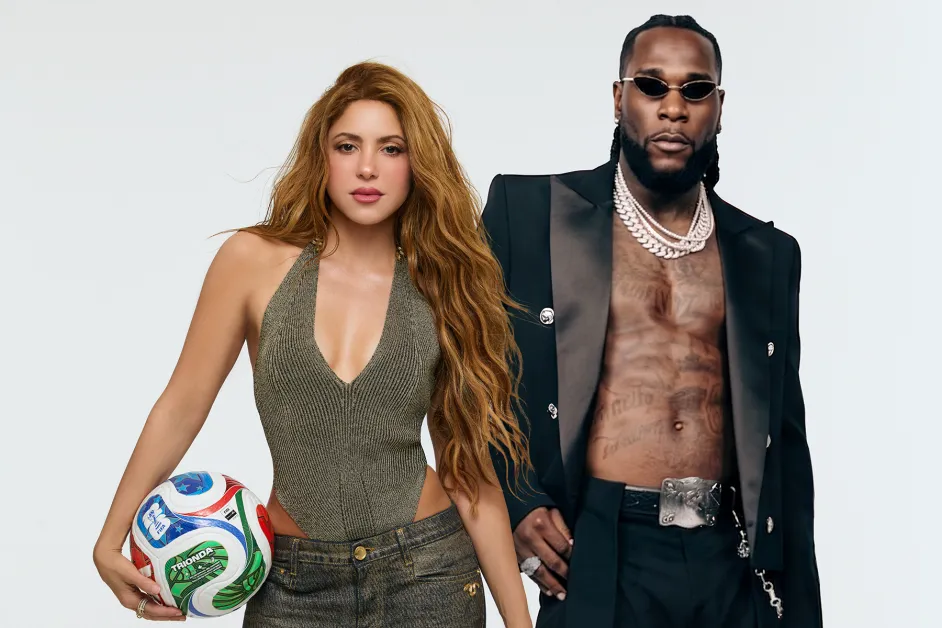
In 2010, Shakira stood at the Soccer City Stadium in Johannesburg with Freshlyground and performed Waka Waka (This Time for Africa) at the World Cup final. The song became the most streamed FIFA World Cup anthem in Spotify history, with over 4 billion YouTube views, and it defined an African tournament in a way that no piece of music had done before or has done since. Sixteen years later, Shakira is back with the World Cup song. This time she is in North America, the tournament has three host countries, and standing next to her is Burna Boy.
"Dai Dai," released last Friday and officially confirmed as the 2026 FIFA World Cup anthem, combines Afrobeats, reggaeton and Latin pop into a multilingual track whose chorus runs through Italian, Japanese, Spanish, French and English, as confirmed by FIFA's official announcement and reporting from NPR and Africanews. The title means "Let's go" in Italian. Burna Boy brings his unmistakable baritone and Afrobeats production to a song that, in the words of The National's review, "most clearly brings an African flavour to a tournament that features the largest contingent of African teams in its history."
That framing matters. The 2026 World Cup has ten African nations competing for the first time. The expanded 48-team format gave the continent the additional slots it had long argued for, and the qualifying campaign produced results that genuinely changed the continental picture: Nigeria and Cameroon absent, Ghana and Cape Verde present, DR Congo returning after 52 years. The scale of African involvement in North America this summer is historically significant. Having an African artist front the official anthem is not incidental to that significance. It reflects it.
What Burna Boy Brings to This Moment
Burna Boy's presence on "Dai Dai" is the result of a decade of work that has shifted Afrobeats from regional dominance to global force. He was the first solo Nigerian artist to win a Grammy Award, in 2021. He was the first African artist to sell out a US stadium, Citi Field in New York in 2023, as confirmed by NPR's reporting on the song's release. His catalogue, from Ye to Last Last to the collaborations with international artists across the streaming era, has built the kind of global audience that makes a song genuinely reach beyond the football fan base and into the cultural mainstream.
The comparison with Freshlyground in 2010 is instructive but also limited. Freshlyground were the South African band who performed alongside Shakira at that tournament, and their contribution gave Waka Waka its African musical identity. Burna Boy operates at a different level of global visibility than Freshlyground did in 2010. His inclusion is not the supporting role. According to Goodmorningamerica.com's analysis of the track, the song blends Afrobeats and reggaeton with his baritone as a lead voice, not a feature. That positioning, 16 years on from the template Waka Waka set, reflects how fundamentally the standing of African music in global pop has shifted.
The Song Itself
Dai Dai opens with Shakira delivering an atmospheric verse over a driving rhythm before Burna Boy enters, his voice harmonising before launching into a verse that references the heavyweights of global football, as reported by Streamlinefeed. The chorus runs "Dai, dai, ikou, dale, allez, let's go," pulling together the five languages across a chant designed for stadium crowd participation. It runs nearly four minutes, comparable in length to Waka Waka, and the music video closes with fireworks and an aerial stadium shot bearing the words "We Are Ready."
Shakira will perform at the 2026 World Cup final halftime show at MetLife Stadium in New Jersey on July 19, confirmed by FIFA as the first-ever halftime show at a World Cup final, modelled on the Super Bowl template the host nation is most familiar with. She is also expected to perform at the opening match at Estadio Azteca in Mexico City on June 11, though FIFA has not confirmed that appearance. All proceeds from "Dai Dai" will go to the FIFA Global Citizen Education Fund, which aims to raise $100 million, confirmed in FIFA's official release.
What It Means for African Football
The cultural dimension of the 2026 World Cup for Africa is not separate from the football dimension. Ten teams, the most in history, heading to North America is the headline. But the way African football is perceived and received by the global audience that watches the World Cup shapes how those ten nations are covered, how their players are discussed, and what narratives form around their progress through the tournament. A World Cup anthem that carries Afrobeats into every stadium and every broadcast, played in the build-up to every match across a 39-day tournament, is the kind of soft cultural presence that matters in ways that are difficult to quantify and easy to underestimate.
Burna Boy said himself that his presence on the song is a point of pride for Africa. "For Burna Boy, his inclusion in the official World Cup anthem marks a zenith in the global ascendance of Afrobeats," as Streamlinefeed reported. The genre has spent a decade earning that position. In North America this summer, with ten African teams on the pitch and one African artist on the anthem, the continent arrives at its biggest World Cup carrying both sporting and cultural weight that 2010 in South Africa produced in a different form but at a similarly significant moment. Dai Dai is the soundtrack. Whether the teams justify the moment is what the tournament will answer.