Table of Contents
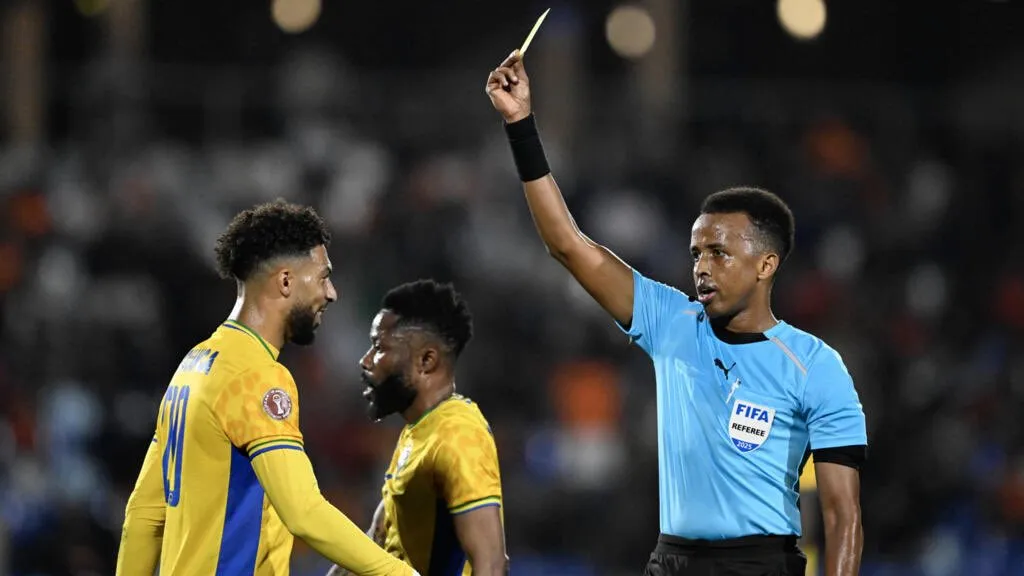
On Saturday, Omar Abdulkadir Artan flew from Istanbul to Miami International Airport. He had a valid United States visa. He was one of 52 referees selected by FIFA to officiate at the 2026 World Cup, the only one from Somalia, and the first Somali official ever chosen for football's most watched tournament. He would have been the first from his country to blow a whistle at a World Cup match. He did not make it past customs.
US Customs and Border Protection subjected Artan to additional inspection upon arrival, a process CBP described in a statement as routine. The inspection ended with a specific determination. Artan was, in the language of the CBP statement, "inadmissible due to vetting concerns." No further details were provided. He was denied entry and flew back to Istanbul. On Monday, FIFA confirmed what CBP had not: the referee was Omar Abdulkadir Artan, Africa's top male referee in 2025, selected by CAF and approved by FIFA for the World Cup. He will not be there.
What FIFA Said
FIFA's response to the situation was a statement of institutional limits rather than advocacy. "FIFA can confirm that match official Omar Abdulkadir Artan will be unable to train and officiate at the FIFA World Cup 2026 after he was denied entry into the United States," the governing body said. "FIFA is not involved in host country immigration processes, including visa adjudications, and has been informed by authorities that Mr Artan's status will not be changed at present. In line with previous FIFA events, a host government ultimately determines who receives a visa and who is admitted into their country."
The statement is factually accurate and diplomatically evasive. FIFA awarded the tournament to a country that has a travel ban in place covering 39 nations, including Somalia. The governing body knew this before the tournament began. Whether FIFA negotiated protections for officials and players from those nations, and what those protections actually delivered, is a question the statement does not answer. What is clear is that no protection was sufficient to allow the continent's top-ranked referee to walk through an airport in Miami.
Who Artan Is
The background to this story matters as much as the political dimension. Artan did not arrive at FIFA's selection list by accident or goodwill. He was named Africa's top male referee in 2025 by CAF, an award that reflects peer assessment and institutional recognition. He officiated the CAF Champions League final second leg in Rabat on May 24, the match between AS FAR and Mamelodi Sundowns that this publication covered at length. That was ten days ago. He refereed a continental final, was assessed as competent, and was already confirmed for the World Cup when he boarded his flight to Miami.
In an interview with Al Jazeera conducted earlier this year in Mogadishu, Artan described what it took to build a refereeing career in Somalia. He said that at times he had to change his route to his local stadium because of explosions in the city. "You cannot give up as a referee," he told Al Jazeera. "You have to have a target." His target was the World Cup. He reached it through war and disruption and institutional patience. The US border stopped him in a building with air conditioning and a CBP desk.
Ciise Aden Abshir, a senior advisor to Somalia's Ministry of Youth and Sports and a former Somalia national team captain, confirmed to AFP that Artan had travelled with a valid US visa and described the outcome as an injustice to African football. "Omar Artan is among Africa's most respected referees and deserves the support of the entire football community," Abshir said. "Denying him entry to the United States and preventing him from officiating scheduled matches harms not only him but the integrity and inclusivity that football represents."
The Travel Ban Context
Somalia is one of 39 countries on the travel ban list signed by President Donald Trump's administration. There are stated exemptions to the ban for World Cup athletes and staff, as confirmed by CBS Sports in their reporting on the incident. Those exemptions did not apply in Artan's case or were not activated before he reached Miami. The CBP statement to CNN confirmed that the additional inspection Artan underwent is "a routine part of CBP's inspection process when officers need to verify information or determine admissibility." Somalia's inclusion on the travel ban means nationals of that country face additional scrutiny as a baseline rather than as an exceptional case.
The broader context is one FIFA was aware of when it awarded the tournament. Iran's national team, as CNN reported in the same coverage, also faced visa delays and received permission to enter the country only one day before their opening match. The pattern across multiple nations on the travel ban list suggests that the framework for managing exemptions was not sufficiently robust before the tournament began. Artan's case is the most visible individual consequence of that gap, partly because of his profile and partly because his role as a referee, rather than a player, sits outside the competitive team framework that attracted the most pre-tournament diplomatic attention.
What Artan Said
Artan issued a statement through FIFA on Monday. "Despite the circumstances, I am in a positive mood and I am focused on the next challenges in my refereeing career," he said. "I would like to thank FIFA and CAF for all their support and I promise to keep my refereeing levels up as I concentrate on the future. I want to thank the football family for their messages and wish my colleagues all the best success during the World Cup and I look forward to joining them again in future competitions."
The composure of that statement, in the circumstances that produced it, is the same quality that made him one of the best referees on the continent. He managed the first African club final he officiated ten days ago with authority. He is managing this with the same discipline. The football community's response, including statements from CAIR, which described the travel ban as one that should not bar people based on race or ethnicity, and from widespread African football figures across social media, suggests the broader reaction is less composed. Rightfully so.
The Governance Question FIFA Has Not Answered
There is a specific question about institutional responsibility that FIFA's statement sidesteps. The governing body requires host nations to sign hosting agreements that include provisions covering the treatment of all participants, officials, and accredited persons regardless of nationality. Whether those agreements contained enforceable protections for officials from travel-ban countries, and whether FIFA pursued those protections with the US government after Artan was denied entry, has not been addressed. The statement that "a host government ultimately determines who receives a visa" is true as a legal matter. Whether it is true as a governance matter, whether FIFA accepted a situation it could have pushed harder to resolve, is the question the organisation has chosen not to engage with.
Artan is back in Istanbul. The World Cup starts in three days. Fifty-one referees will take to the pitch instead of fifty-two. One of Africa's best officials will watch from a distance a tournament he earned the right to be part of. The US border said no. FIFA said it had no power. The question of who had the power, and whether they used it, will outlast the tournament that starts on Thursday.