Table of Contents
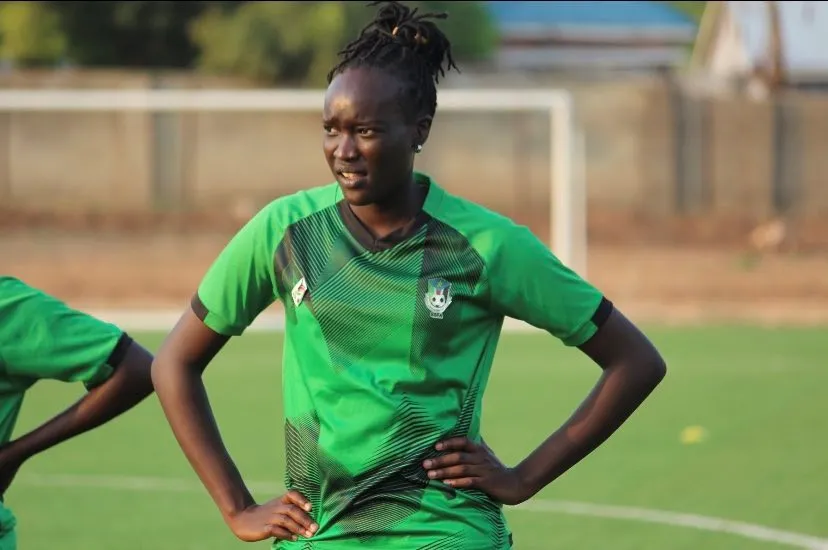
South Sudan’s first-ever Under-17 girls’ academies tournament, held in Juba in March 2026, marked a significant milestone for women’s football in the country. Featuring 16 academy teams from across the nation, the competition not only showcased emerging talent but also underlined the South Sudan Football Federation’s (SSFF) growing commitment to structured youth development. While full tournament results were not widely published, officials described the event as a critical step in identifying and nurturing the next generation of national team players. It is a signal of intent from one of Africa’s youngest nations, a country still defining its identity on and off the pitch. For South Sudan, girls’ football is no longer an afterthought. It is becoming a foundation for long-term development.
According to Africa Top Sports, the tournament featured 16 academy teams, bringing together some of the most promising young players in the country. The competition provided rare match exposure for young girls in a system that is still developing structured pathways for elite performance. For a nation where women’s football only began taking structured form in the past decade, that number alone tells a story of rapid growth. But the significance of this tournament extends far beyond the fixture list. It reflects a deeper shift in how football is being used to reshape opportunity, challenge cultural norms, and build a future for the next generation of players.
From Strategy to Structure
To understand why the U17 tournament matters, it is necessary to look at the broader framework behind it.
South Sudan’s football journey is unique. The country gained independence in 2011, became a FIFA member in 2012, and only fielded its first women’s national team in 2019, as outlined by Inside FIFA. In football terms, it is a nation starting almost from zero.
Recognizing this, the South Sudan Football Association (SSFA) launched its “Stars Unite” women’s football strategy, a structured plan aimed at building the game from the grassroots level upward.
SSFA president Amin Francis made the objective clear when speaking ahead of the strategy launch. “The plan is to include everyone. We want to continue supporting more women in football through training more coaches, referees and also the new women’s national league,” he said, as reported by Inside FIFA.
The strategy set ambitious targets, including increasing female participation by 70 percent and expanding the number of players beyond the estimated 5,000 already involved nationwide.
That vision is now beginning to take shape. The U17 tournament is not an isolated event. It is part of a deliberate system designed to create a pipeline from grassroots football to elite competition.
Building a Pathway Through Competition
One of the biggest challenges facing women’s football in emerging nations is the lack of structured competition. Talent exists, but without regular tournaments, it struggles to develop.
This is where the U17 competition becomes critical.
As illustrated by Africa Top Sports, the tournament is designed to “foster competitive platforms for young female athletes” and strengthen the foundation for future national teams. That emphasis on competition is essential. It transforms football from a recreational activity into a development pathway.
Jean Sseninde, a women’s football consultant with SSFA, explained the importance of structured leagues in comments to FIFA. “The women’s league will create a pathway for players to be selected for the senior women’s national team… and make the selection process of the best players easy,” she said.
Her point applies equally to youth football. Without platforms like the U17 tournament, identifying and nurturing talent becomes guesswork. With them, it becomes a system.
The introduction of competition at this level signals that South Sudan is beginning to understand a fundamental truth of modern football: development requires structure, not just participation.
Changing Mindsets Off the Pitch
Yet the growth of girls’ football in South Sudan is not only a sporting story. It is also a social one.
In many parts of the country, cultural expectations have historically limited opportunities for girls. According to estimates by World Vision, only 8 percent of girls complete secondary education, while more than half are married before the age of 18.
In that context, football becomes something more than a game. It becomes a form of resistance.
Helen Tarso Aninyesi, the project manager for the Stars Unite strategy, addressed this directly. “We want to show the world that South Sudan is growing in women’s football. We also want to change the mindset of some people who still don’t believe that women can play football,” she said, as outlined by Inside FIFA.
The players themselves echo that sentiment.
Dina, an 18-year-old player involved in grassroots programmes, described the personal impact of the game. “Football makes me the happiest… when I play, I don’t think about anything else,” she said, as reported by World Vision.
Another young player, Margaret, highlighted the broader message. “Boys and girls are able to do the same thing. Girls can play well, sometimes even better than boys,” she said.
These are not just quotes. They are indicators of change. They show how football is being used to challenge long-standing perceptions about gender roles in society.
The League That Changed Everything
The U17 tournament is part of a wider ecosystem that includes one of the most important developments in South Sudanese football: the launch of the national women’s league in 2021.
According to Beyond Sport, the league marked a “milestone moment” in the country’s football strategy, providing a platform for competitive play and increasing visibility for the women’s game.
Sseninde emphasized its broader impact. “The women’s league is going to boost the number of women and girls playing football at all levels… it is really exciting,” she said.
The league does more than create competition. It creates visibility. And visibility is critical in changing public perception.
Shilene Booysen, who took charge of the national team during its development phase, recognised the significance of the project. “When I saw what South Sudan was doing in terms of women’s football… I have always wanted to be a part of something like this,” she said, as reported by Beyond Sport.
Her involvement reflects growing confidence in the direction of South Sudan’s football development. It signals that the country’s efforts are being noticed beyond its borders.
A Long Road Still Ahead
Despite this progress, the challenges remain significant.
South Sudan’s women’s national team is still in its infancy. As reported by The Guardian, the team has played only a handful of matches since its formation and remains unranked in FIFA standings.
Captain Amy Lasu acknowledged the difficulties. “It is challenging because for the longest time, football has been considered a men’s sport. It was considered a taboo for girls to play,” she said.
Her words highlight the reality behind the progress. Growth is happening, but it is happening from a low base.
There are also structural challenges, including limited infrastructure, funding constraints, and the lingering effects of conflict. South Sudan is still rebuilding after years of instability, and football development must compete with broader national priorities.
Yet there is also resilience.
Lasu remains optimistic about the future. “I hope and pray that one day the national team will reach a high level… maybe even the World Cup one day,” she said.
That ambition may seem distant. But in a country where women’s football barely existed a decade ago, even the idea of such a future represents progress.
Why This Matters for African Football
South Sudan’s story is not isolated. It reflects a broader trend across Africa, where women’s football is expanding rapidly despite structural challenges.
The significance of the U17 tournament lies in what it represents. It shows that development does not have to start at the top. It can begin at the grassroots level, with young players, local academies, and community programmes.
It also demonstrates that football can play a role beyond sport. It can influence education, challenge social norms, and create opportunities for young girls who might otherwise be excluded.
For African football, this matters.
Because the growth of the game on the continent will not be defined only by elite national teams. It will be shaped by how effectively countries invest in the next generation.
A Beginning, not a Peak
The U17 tournament in Juba is not an endpoint, but evidence of a system beginning to take shape. It connects grassroots participation to national ambition, linking young players to a future that previously did not exist. In a country where opportunities for girls have long been limited, football is becoming more than a sport. It is a pathway, a platform, and in many cases, a form of possibility. What South Sudan builds from here will determine whether this moment becomes a turning point or simply a promising start.