Table of Contents
The group stage of the 2026 FIFA World Cup is complete, and African football has just produced the best collective showing in the history of its participation in the tournament. Six of the continent's ten representatives have confirmed their place in the round of 32. A seventh nation's World Cup ended with one of the great African performances of any tournament, holding two genuine football powers to draws without losing a single match. Only Tunisia leave the United States, Canada, and Mexico without anything to show for their campaign beyond the lessons learned. Here is the complete picture, updated, nation by nation.
Through to the Round of 32
Morocco finish top of their own group and top of the African table, the only nation among the ten to go through the entire group stage unbeaten. A draw with Brazil, a win over Scotland, and a win over Haiti gave Mohamed Ouahbi's side six consecutive World Cup matches without defeat across two tournaments, extending the platform built in Qatar four years ago. They face the Netherlands in the round of 32 on June 29 in Guadalupe, Mexico.
Ivory Coast secured their first ever knockout-stage appearance in five World Cup attempts. Amad Diallo's stoppage-time winner against Ecuador, a narrow defeat to Germany that confirmed their genuine quality, and the results that followed sent Emerse Fae's side through. They face Norway in the round of 32 on July 1, a rematch of sorts for a continent that has watched Erling Haaland torment African defences twice already this tournament, this time from the opposite side of the draw.
South Africa reached the knockout stage for the first time in the country's World Cup history. Thapelo Maseko's 63rd-minute strike against South Korea, born from a Tshepang Moremi assist seconds after coming on as a substitute, sent Bafana Bafana through as Group A runners-up behind an unbeaten Mexico. They face Canada on Sunday, June 28, in Inglewood, California, the single biggest match South African football has ever played.
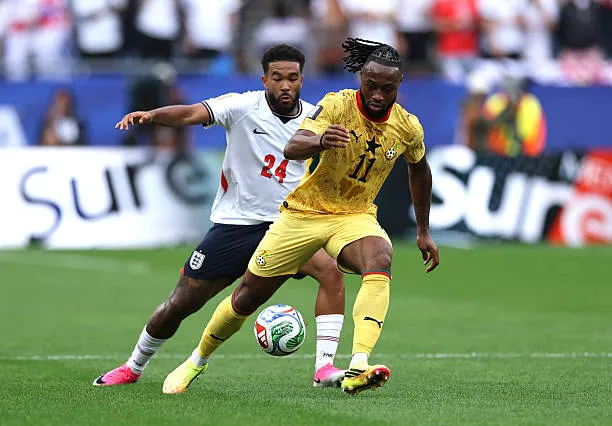
Ghana confirmed their progression with four points from two completed matches before their final group fixture against Croatia, a draw against England in Boston having already done the heavy lifting. Carlos Queiroz's side, built in six chaotic weeks after Otto Addo's March dismissal, reached the knockout stage having gone winless in their six warm-up matches before the tournament began. The transformation under Queiroz is one of the genuine coaching stories of this World Cup.
Egypt are through after their 3-1 win over New Zealand ended a 92-year, seven-match wait for a first ever World Cup victory. Mohamed Salah's goal and assist against New Zealand, in what he has described as potentially his final World Cup, will be remembered as one of the defining individual moments African football has produced at this tournament. They face Group D runners-up Australia on July 3 in Dallas.
Senegal produced the most emphatic statement of any African nation in the tournament's closing round of group matches, beating Iraq 5-0 in a win-or-go-home fixture that put them in strong position to advance as one of the best third-placed teams. The margin of victory, after defeats to France and Norway in their opening two matches, gives Kalidou Koulibaly his chance to extend what he has described as his final World Cup beyond the group stage. Their knockout-stage opponent will be confirmed once the full third-place table is settled.
The Story of the Tournament
Cape Verde have become the smallest nation in World Cup history to reach the knockout stage, and they have done it in their tournament debut. A goalless draw with Spain, a 2-2 draw with Uruguay, and a goalless draw with Saudi Arabia took Jose Pina's side through the group stage without winning a single match and without losing one either. Three draws against three different calibres of opposition, two of them genuine football powers, is a record that speaks to defensive organisation and composure that no one outside the Cape Verdean camp expected from a nation with a population smaller than many World Cup stadiums hold across a season. They face defending champions Argentina in the round of 32 on July 3 in Miami. As one NPR analysis of the tournament noted, this is not a fluke. African soccer is playing the long game, and pundits are already looking ahead to 2030, when Morocco co-hosts a tournament that this generation of African football suggests will be a different story altogether.
Eliminated, But Not Without a Mark
DR Congo's extraordinary return to the World Cup, 52 years after their only previous appearance as Zaire, ended with their group-stage exit following a 1-0 defeat to Colombia. Their campaign will be remembered for Yoane Wissa's stoppage-time equaliser against Portugal, the first World Cup goal in the country's history, a result that held Cristiano Ronaldo's side to a draw in what was likely his final World Cup appearance. DR Congo needed to beat Portugal in their final group match to progress and could not complete the job, but the achievement of competing meaningfully in their return to the world stage after more than five decades stands on its own terms.
Tunisia are the only African nation eliminated before the conclusion of the group stage proper, and their campaign will be remembered as a cautionary tale rather than a positive story. A 5-1 opening defeat to Sweden was followed by a 4-0 loss to Japan in the 1000th match in World Cup history, a collapse severe enough that the Tunisian Football Federation sacked head coach Sabri Lamouchi mid-tournament and replaced him with Herve Renard. The gap between Tunisia's qualifying campaign, the best defensive record of any African nation with zero goals conceded across ten matches, and their tournament reality, nine goals conceded in two matches before elimination, remains the starkest contrast between preparation and performance that this World Cup has produced from any of the sixteen nations who have currently been eliminated.
Algeria: Still Mathematically Alive
Algeria sit in a position that requires results elsewhere to fall their way. Vladimir Petkovic's side ended a twelve-year wait for a World Cup win against Jordan after a heavy opening defeat to Argentina, and their final group match against Austria will determine whether they progress as a top-two finisher or require a place among the best third-placed sides. Their fate, alongside Austria's, will be confirmed once their final fixture concludes.
What Six Out of Ten Actually Means
No African World Cup campaign in history has produced this many nations through to the knockout stage. The previous high point, by most reasonable historical comparisons, came nowhere close to six of ten qualified nations advancing. The expanded 48-team format, the additional slots that African football federations spent two decades lobbying for, and the larger 32-team knockout bracket that allows eight third-placed finishers through, have all combined to produce exactly the kind of result the continent's administrators argued the expansion would deliver. Whether the argument was about fairness of representation or genuine competitive merit, the answer this tournament has provided is unambiguous: when given more opportunities, African football has taken them. Morocco, Ivory Coast, South Africa, Ghana, Egypt, Cape Verde, and likely Senegal carry that into the knockout stage. The round of 32 begins this weekend. The continent has never been better represented in the matches that matter most.