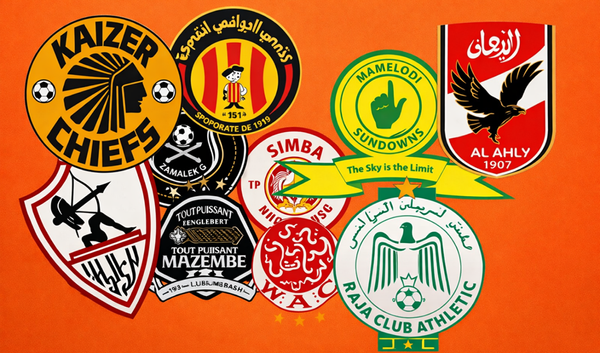
Under the floodlights of a packed stadium, as thousands sing, chant, and hold their breath in unison, one question quietly lingers beneath the noise: what truly makes this club different from the rest? Why do some teams fade with time, while others like Al Ahly SC or Mamelodi Sundowns grow into symbols that outlive generations?
In African football, greatness is never accidental. It is built, layer by layer, through years of triumph, heartbreak, reinvention, and dominance. Yet not every successful club earns the title of “giant.” That word carries weight. It demands more than trophies; it demands presence, influence, and a legacy that echoes across borders and decades.
So, what separates a champion from a giant? Is it the roar of millions of fans, the pressure of history, or the quiet power of institutions built to last? This question sits at the heart of African football’s identity.
To answer it, we must look beyond the surface, beyond scorelines and celebrations, into the deeper forces that shape the continent’s most powerful clubs.
Continental Trophy Cabinet
The clearest and most measurable indicator of a giant African club is success in the Confederation of African Football competitions. At the highest level, the CAF Champions League stands as the ultimate benchmark of continental supremacy. Clubs that consistently win or compete deep into this tournament establish themselves as forces that transcend domestic dominance and shape African football history.
No club embodies this standard more than Al Ahly SC. Their record haul of CAF Champions League titles and vast silverware collection underline a culture built on relentless success. As highlighted in a 2025 feature by Forbes, Al Ahly’s dominance places them firmly ahead of their continental rivals, with the club’s official records reflecting a trophy count that exceeds 150 titles. This reflects sustained excellence across generations rather than isolated dominance.
Beyond sheer numbers, Al Ahly’s consistency in reaching the latter stages of competitions further reinforces their status. As noted in analysis by BBC Sport, the club has established itself as a regular presence in the advanced stages of the CAF Champions League, frequently reaching finals and maintaining elite-level performance over extended periods. This consistency is what separates true giants from one-season successes.
However, being a giant is not solely about lifting trophies—it is also about maintaining relevance at the highest level year after year. Clubs such as Espérance de Tunis and Mamelodi Sundowns exemplify this principle. While they may not match Al Ahly’s trophy count, their repeated deep runs in CAF competitions demonstrate structural strength, tactical discipline, and the ability to compete consistently against Africa’s best.
TP Mazembe also warrants deeper recognition in this conversation. Beyond their five CAF Champions League titles, the Congolese club made global headlines with their run to the final of the FIFA Club World Cup in 2010, becoming the first African club to achieve that feat. Their sustained competitiveness, distinct ownership structure, and strong regional identity highlight that footballing power is not confined to North or Southern Africa alone.
Massive and Passionate Fanbase
One of the defining characteristics of a giant African football club is the scale and intensity of its support base. Across the continent, football is not just entertainment, it is a deeply embedded cultural force that connects communities, shapes identities, and inspires collective emotion. Clubs that achieve “giant” status are those whose influence extends far beyond results on the pitch.
Research highlighted by Pulse Sports underscores the scale of football engagement across Africa, noting that the sport commands a deeply rooted and widespread following across the continent. This broad base of support forms the foundation upon which the biggest clubs build their influence.
At the elite level, clubs such as Al Ahly SC exemplify this phenomenon. The club commands tens of millions of supporters across digital platforms, reflecting a reach that extends far beyond Egypt. More importantly, this support is organised, visible, and deeply embedded in club culture. Ultras Ahlawy, formed in 2007, became one of the most politically significant supporter groups on the continent. Their role in the 2011 Egyptian revolution — occupying Tahrir Square alongside pro-democracy protesters and providing crowd management experience honed in the terraces of Cairo International Stadium — turned them from a football ultras group into a national symbol. That crossover between football identity and civic history is what separates a giant’s fanbase from mere popularity.
This is where the distinction between popularity and institutional support becomes clear. A large following alone does not define a giant; what matters is how that support manifests. In the case of Al Ahly, fan culture is structured, influential, and historically significant, reinforcing the club’s presence both inside and outside football.
To broaden the continental picture, Ghana’s Asante Kotoko demonstrate how deep-rooted support contributes to “giant” status independently of continental silverware. Kotoko have won the CAF Champions League twice — in 1970 and 1983 — and have claimed over 25 Ghanaian league titles, making them the most decorated club in their country’s history. Their rivalry with Hearts of Oak, the oldest in Ghanaian football, draws some of the largest crowds on the continent and functions as a proxy for regional, ethnic, and class identity that stretches well beyond sport. This reinforces the idea that fan power in African football is not only measured in numbers, but in cultural and historical weight that no trophy count alone can fully capture.
Domestic Dominance and Longevity
While continental success shapes global reputation, domestic dominance remains the true foundation of greatness in African football. Sustained success at home reflects structure, depth, and institutional strength.
Data from Statista shows that dominance at the highest level is rarely accidental. Clubs such as Al Ahly SC have translated domestic superiority into continental records, winning 12 CAF Champions League titles, more than double most of their closest rivals. This level of consistency reflects decades of internal stability rather than isolated peaks.
The same pattern is visible across other elite institutions. Zamalek SC and TP Mazembe have each secured five continental titles, reinforcing how sustained domestic competitiveness often feeds international success. According to data from Transfermarkt and Sofascore, these clubs have remained relevant across multiple generations.
Domestic records further emphasize this dominance. According to Transfermarkt, Zamalek SC has recorded 14 Egyptian Premier League titles, placing them second only to Al Ahly domestically and reinforcing their standing as one of the continent’s most decorated clubs. Similarly, clubs like Espérance de Tunis, with around 30 league titles, and Wydad Casablanca, with over 20 league titles, illustrate how long-term domestic control reinforces continental credibility.
Longevity is a key factor in this regard. Many clubs may rise to prominence for a short period, but only a few sustain their success over time. Giants maintain relevance through changing eras, adapting to new challenges while continuing to compete for titles.
Financial Power and Infrastructure
In modern football, success is increasingly tied to financial strength and organizational capacity. Across Africa, the gap between elite clubs and the rest is often defined not just by trophies, but by economic power and structural investment.
According to Transfermarkt estimates, Mamelodi Sundowns FC is currently among the most valuable clubs in Africa, with a squad market value of approximately €34.73 million, while Al Ahly SC follows closely at €32.58 million. These figures provide an indication of financial strength, though they are based on estimated market valuations rather than audited financial data.
Revenue generation further reinforces this dominance. Foot Africa reports that Mamelodi Sundowns earned a record $12.55 million from the 2025 FIFA Club World Cup, including participation bonuses and match-based earnings. Other continental heavyweights such as Al Ahly and Espérance also secured significant revenues from the same competition, highlighting how global tournaments have become a key financial driver.
This financial strength directly translates into a competitive advantage. Wealthier clubs are able to recruit elite talent, retain key players, and compete consistently at both domestic and continental levels.
Infrastructure is equally critical. Leading clubs invest heavily in training facilities, youth academies, and long-term development systems. The official Mamelodi Sundowns statement correctly captures this approach: “The success and achievements of Mamelodi Sundowns over the past two decades have been based on its deep commitment to the development, growth, and financial sustainability of the Club’s players.”
More Than Clubs, Institutions of Power
Ultimately, the difference between a successful club and a giant in African football is permanence. Champions win titles. Giants build systems that continue winning long after players, coaches, and eras change. From Al Ahly’s sustained continental dominance to Sundowns’ structured financial model and Mazembe’s historic global breakthrough, these clubs demonstrate that greatness is not a moment; it is a system sustained over time. In African football, giants do not chase history. They control it.


Related News
Six VAR Controversies That Shaped African Football
Mar 08, 2026
The 7 Biggest Football Broadcasters in Africa in 2026
Mar 02, 2026
Top African Clubs with the Most Expensive Shirt Sponsorship Deals in 2026
Mar 02, 2026