

Uganda’s ambitious vision for global sports hosting took a bold step forward recently, as government officials signaled intentions to pursue a bid for the FIFA World Cup, building on the momentum from securing co-hosting rights for the 2027 Africa Cup of Nations (AFCON).
The disclosure came from Dr. Kedrace Turyagyenda, Permanent Secretary in the Ministry of Education and Sports, during her appearance before Parliament’s Public Accounts Committee (PAC).
The session focused on scrutinizing the December 2025 Auditor General’s report, but discussions veered into broader infrastructure plans and long-term sports ambitions.
Dr. Turyagyenda emphasized the strategic importance of ongoing stadium developments, noting that Uganda is prioritizing facilities capable of meeting international standards. She highlighted plans for multiple stadia with substantial capacities—targeting over 45,000 seats in some cases—as essential for future major events.
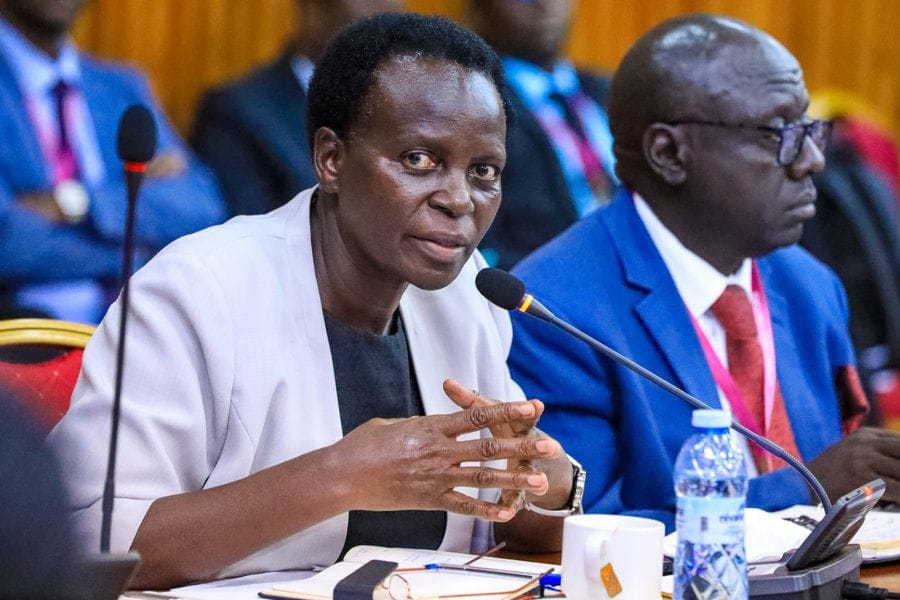
“So that eventually, we should bid for it, if we are given a World Cup, then we have stadia to run. The next bid is in 2031, for the World Cup and I think we are already thinking about it because we are now going to have at least three stadia that we think can be looked at,” Dr. Turyagyenda stated.
This comes on the heels of Uganda’s successful joint bid—alongside Kenya and Tanzania—to host AFCON 2027, awarded by the Confederation of African Football (CAF) in September 2023 under the “Pamoja 2027” initiative. The tournament represents a historic milestone for East Africa, as it will be the first time the region stages the continent’s premier football showcase.
Preparations have accelerated infrastructure projects, including renovations to the Nelson Mandela National Stadium (Namboole) in Kampala, construction of the Akii-Bua Stadium in Lira, and the Hoima City Stadium, among others.
The government’s forward-thinking approach reflects growing confidence in Uganda’s ability to deliver large-scale international events. Hosting AFCON 2027 is seen as a crucial stepping stone, providing valuable experience in logistics, security, hospitality, and venue management—key requirements for any FIFA World Cup bid.
However, a solo Ugandan bid for the 2031 FIFA World Cup would face significant hurdles.
FIFA has already awarded the men’s World Cup hosting rights as follows:
• 2030: Co-hosted by Morocco, Portugal, and Spain (with centenary matches in South America).
• 2034: Saudi Arabia.
The 2031 edition would likely fall under FIFA’s rotation system or new bidding cycles, but no formal process for 2031 has been confirmed as open yet, and bids typically involve multiple nations due to the tournament’s massive scale (48 teams since 2026, requiring numerous high-standard venues).
Additionally, Uganda has submitted a separate bid to host the 2031 African Games (a multi-sport continental event), with recent positive evaluations from African Union Sports Council inspectors boosting optimism.
While the World Cup ambition remains aspirational at this stage—more a long-term vision tied to infrastructure legacy than an imminent formal application—it underscores Uganda’s rising profile in African and global sports. Success in AFCON 2027 could pave the way for even greater opportunities, positioning the country as a credible contender for elite international tournaments in the decades ahead.
As Dr. Turyagyenda’s remarks suggest, the focus now is on execution: delivering world-class facilities that not only serve AFCON but lay the foundation for dreams that once seemed distant. For Ugandans, this represents not just sporting pride, but potential economic boosts through tourism, investment, and national development.
Related News
History Overturned: Caf Strips Senegal Of Afcon Crown, Morocco Crowned Champions After Extraordinary Final Walkout
Mar 17, 2026
CAF's WAFCON Crisis Is Not Just a Scheduling Problem — It's a Statement About How Africa Values Its Women
Mar 05, 2026
The 7 Biggest Football Broadcasters in Africa in 2026
Mar 02, 2026