Table of Contents
Édouard Mendy confirmed his retirement from international football on September 14. The announcement made him the latest in a sequence of African players who have stepped back from national duty since Senegal were eliminated in the 2026 World Cup round of 32 by Belgium, a 3-2 defeat after leading 2-0, a result that completed the worst possible exit for a team whose World Cup campaign had been described before the tournament as their strongest chance at a deep run since AFCON 2022. Mendy finished with 60 caps and will be remembered for his role in the 2022 AFCON, a clean sheet in the final against Egypt, and a Chelsea Champions League campaign in 2021 that placed him, briefly, among the four best goalkeepers in world football. He joins a list of African retirements after this World Cup that represents the most significant single-generation departure the continent has experienced since the post-2010 exits of Didier Drogba's era.
Senegal: Mané, Mendy, Koulibaly
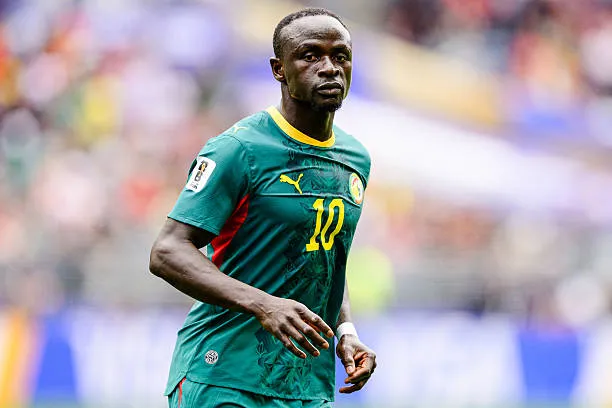
Sadio Mané confirmed his retirement from the Senegal national team in July, immediately after the Belgium defeat. He retires having scored 55 goals in 132 caps, having won the 2022 AFCON, and having become the most significant Senegalese sportsperson in any discipline in the country's history. His statement placed everything in terms of sacrifice and pride: know that I sacrificed everything for this flag, he wrote. I gave the very best of myself, and I always fought fiercely for our homeland. The sentiment is not promotional. It is the genuinely felt closing paragraph of a career that carried an entire nation's sporting identity for fifteen years.
Kalidou Koulibaly confirmed his retirement in August, completing the dissolution of the Senegalese defensive core that won the AFCON in Cameroon. Koulibaly played 36 of his 102 caps as captain, anchored the defence that kept four clean sheets across the 2022 AFCON tournament, and leaves at 35 as the player whose physical authority gave Senegal the defensive foundation from which Mané's attacking brilliance could operate. Mendy's retirement nine days ago closes the Senegalese goalkeeper chapter that began with the departure of Cheikh Ndiaye's generation in 2015. Three players, three cornerstones, all gone in the same August to September window. Pape Thiaw has also been replaced as manager after the World Cup exit. Senegal are rebuilding from the ground up.
Algeria: Mahrez, Mandi
Riyad Mahrez confirmed his international retirement ahead of the World Cup itself, having stated during an AFCON press conference that the North American tournament would be his final chapter with the Fennecs. He retires as the most decorated Algerian player in the game's modern era: the 2019 AFCON, the Premier League title with Manchester City, four top-flight titles in England, and a career across Leicester, Manchester City, Al-Ahli and the twilight games in Saudi Arabia. He departs with 83 international caps and 30 goals, the all-time record for Algeria. Aïssa Mandi retired alongside him, completing Algeria's post-World Cup transition with the departure of the defensive midfielder who captained the side through the 2026 qualifying campaign and the tournament itself.
Ivory Coast and Ghana: Fofana, Ayew
Sébastien Fofana announced his retirement from international football on September 14, joining the departures from Ivory Coast that had been anticipated since the Elephants' World Cup exit in the round of 32 to Norway. Fofana earned 34 caps, scored seven goals, and was part of the squad that won AFCON 2023 in remarkable circumstances on home soil in January 2024. He featured in two matches at the 2026 World Cup before the Norway defeat. André Ayew had already confirmed his departure from the Black Stars following the World Cup, completing a 16-year international career of 120 caps and 24 goals that made him Ghana's most consistently present player across three different generational cycles. Jordan Ayew has not confirmed his position but told media he would take time before deciding, leaving Ghana's attacking leadership question open for Eric Addo, who has taken interim charge ahead of the AFCON 2027 qualifiers.
What the Departures Create
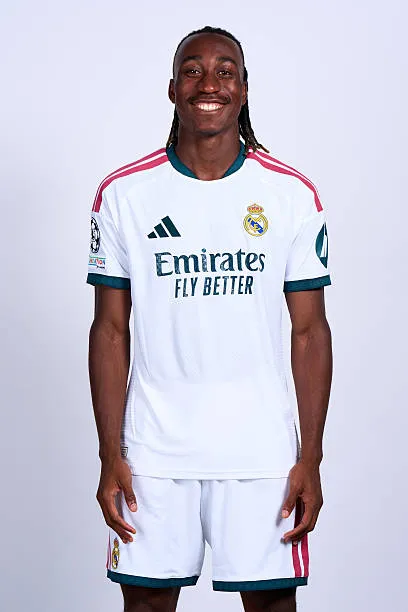
The simultaneous departure of this many prominent African internationals from national duty produces two things simultaneously. First, a talent vacuum: the squads that open AFCON 2027 qualification this month are not the squads that competed at the World Cup. The players who made those tournaments possible are gone. The programmes must identify and develop the next generation inside an eight-month window before the AFCON itself. Second, an opportunity: the retirements open space for younger players, several of whom are already at European clubs at a higher level than the players they replace occupied at the equivalent stage. Diomandé at Real Madrid. Bouaddi at Manchester City. Maza at Leverkusen. The replacement generation is not a lesser generation. It is a different one, arriving earlier than the previous cycle's exits required them to. Sport Blot will carry the full squad rebuilding picture for each of the affected programmes through the qualification campaign.