
Table of Contents
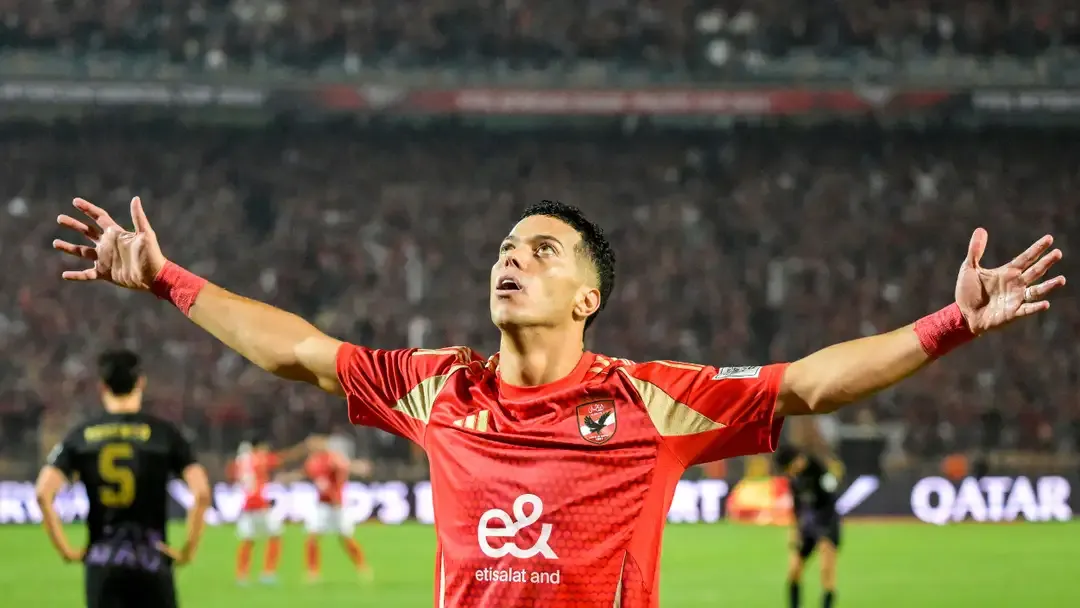
Al Ahly are having their worst season in years, and that is the honest place to start. The record twelve-time African champions finished third in the 2025-26 Egyptian Premier League, three points behind champions Zamalek and one behind Pyramids. They lost their Champions League quarter-final to Espérance de Tunis, 4-2 on aggregate, in March. Their Danish coach, Jess Thorup, was gone by mutual consent on 4 June. This season they are playing in the CAF Confederation Cup, not the Champions League, for the first time in years.
And yet the question in the headline still stands. Twelve Champions League titles. Five consecutive finals between 2020 and 2024. Forty-five Egyptian league titles. No club on the continent has anything close. Al Ahly do not win because they are lucky, or because they have the best players in any given year. They win because the club is built to win — and because winning, in African football, pays for more winning. The 2025-26 season is the exception that explains the rule.
The record, in numbers
The numbers need no decoration. Al Ahly have won the CAF Champions League in 1982, 1987, 2001, 2005, 2006, 2008, 2012, 2013, 2020, 2021, 2023 and 2024. The nearest challengers, Zamalek and TP Mazembe, have five each. The 2024 title, a 1-0 aggregate win over Espérance settled by a Roger Aholou own goal four minutes into the second leg in Cairo, was their fourth in five years and the end of a run of five straight finals. They went through that campaign unbeaten, conceding a single goal in 14 matches.
Domestically the gap is wider still. Forty-five Egyptian Premier League titles, the most recent in 2024-25, won by two points over Pyramids and sealed with a 6-0 win over Pharco on the final day. Add 39 Egypt Cups and 16 Egyptian Super Cups, and the club counts 156 trophies across all competitions. At the draw for the 2025-26 Champions League, CAF's own five-year ranking had Al Ahly top of the continent on 93 points — fifteen clear of Mamelodi Sundowns in second.
That ranking is the point. It is not a museum piece. It is a seeding advantage, a fixture advantage and a revenue advantage, renewed every year the club goes deep.
The money: winning pays, and paying wins
Start with the prize money, because CAF publishes it — Disclosed, not estimated. The Champions League winner takes $4 million. The runner-up takes $2 million, the losing semi-finalists $1.2 million each, the quarter-finalists $900,000, and even the clubs that fall in the group stage take $700,000. A club that reaches the semi-finals or better almost every year banks seven figures from CAF alone, before a ball is kicked domestically, and a club that wins banks $4 million plus the Super Cup and the Club World Cup place that follow.
Al Ahly have collected at the top end of that scale more often than anyone. Between 2020 and 2024 they played in five straight finals, winning four. That is roughly $16 million in winners' and runners-up prize money from the Champions League alone across five seasons, before counting the group-stage and knockout payments that precede every final.
Then there is the Club World Cup. Al Ahly played in the expanded 32-team tournament in the United States in June 2025, drawing 0-0 with Inter Miami in the opening match, losing 2-0 to Palmeiras, and finishing with a 4-4 draw against Porto in which Wissam Abu Ali scored a hat-trick. They went out in the group stage with two points. They still earned a reported $11.55 million from the tournament — $9.55 million in participation money under FIFA's published structure for African clubs, plus $1 million for each of their two draws. A group-stage exit at the Club World Cup paid Al Ahly nearly three times what winning the Champions League pays.
This is the loop that sustains the dominance. Deep continental runs fund the squad that produces the next deep continental run. Rivals who reach the group stage once bank $700,000 and start again from zero. Al Ahly bank the winner's cheque, the Club World Cup cheque, and the commercial income that follows a club that is on television in June and July, and they spend it on the next squad.
The structure: the club outlasts its coaches
The second pillar is the one most often missed, because it is boring. Al Ahly, founded on 24 April 1907, are an institution before they are a team. The coaching churn of the last eighteen months proves the point rather than undermining it. Marcel Koller, the coach of the 2023 and 2024 titles, was sacked in April 2025. José Riveiro lasted six matches before a 2-0 defeat to Pyramids ended his tenure on 31 August. Emad El Nahhas steadied the side as interim coach. Jess Thorup arrived in October 2025 on a two-and-a-half-year deal, won the Egyptian Super Cup 2-0 against Zamalek in November, and was gone by June. Hussein Ammouta, the Moroccan who won the 2017 Champions League with Wydad Casablanca at Al Ahly's expense, took over on a two-year deal on 15 June 2026.
Four head coaches in fourteen months, and the club never stopped functioning. The recruitment kept coming — Mahmoud "Trézéguet" Hassan back from Trabzonspor, Ahmed "Zizo" Sayed signed from arch-rivals Zamalek, Mohamed Ali Ben Romdhane in midfield — and the squad depth that lets Al Ahly rotate through a league, a cup and a continental campaign without falling apart stayed intact. That is not a coaching achievement. It is a structural one: a club whose academy, scouting, medical and administrative machinery does not depend on whoever is standing on the touchline.
The same structure shows up in the details. Al Ahly's home is the Cairo International Stadium, and a two-legged tie that ends in Cairo is a different proposition from one that ends anywhere else. The 2024 final was won there, by an own goal in the fourth minute, in front of a crowd that had decided the outcome before kick-off. The 2026 quarter-final was lost there too — Espérance won 3-2 on the night, Hamza Jelassi scoring at both ends, including the stoppage-time winner — which is a reminder that the fortress is an advantage, not a guarantee.
The aura: ties are won before they are played
The third pillar is the hardest to measure and the easiest to see. Twelve stars on the shirt change how opponents play. Teams arrive in Cairo needing a result and play for a draw. Referees, crowds and occasions all tilt the same way. Al Ahly have won finals by own goals and survived semi-finals on away goals — the 2025 semi-final against Sundowns was lost on away goals, but the 2024 title was won by a single own goal across 180 minutes — because they are the side that stays in ties long enough for the other team to make the mistake.
The unbeaten run that ended with the 2024 title — twenty Champions League matches without defeat — was not built on blowing teams away. It was built on conceding once in an entire campaign and trusting that one goal, somewhere, would be enough. That is aura as a tactic: the belief, shared by both dugouts, that Al Ahly will find a way, and the knowledge, shared by both dugouts, that the way usually involves the other side blinking first.
The warning inside the stumble
None of this is permanent, and the last two seasons say so plainly. Pyramids, bankrolled and ambitious, won the 2025 Champions League by beating Sundowns 3-2 on aggregate, finished above Al Ahly in the league, and ended Riveiro's tenure with that 2-0 win in August 2025. Sundowns, who knocked Al Ahly out of the 2025 semi-finals on away goals, went on to win the 2025-26 title, beating AS FAR 2-1 on aggregate in the final in May 2026. Espérance, the side Al Ahly beat in the 2024 final, knocked them out in the 2026 quarter-finals. The gap at the top of African club football has narrowed to the width of a single tie — and in 2025-26, Al Ahly lost the ties that mattered.
That is the honest accounting. The machine is real: the prize-money loop, the institutional depth, the Cairo fortress, the twelve titles that weigh on every opponent. But the machine needs constant feeding, and for two seasons it has not been fed. Ammouta's rebuild has started promisingly — second in the league after eight rounds, through to the Confederation Cup group stage after a 4-0 win over Uganda's Kitara — yet the Confederation Cup is, by Al Ahly's standards, a consolation prize.
What it means for the continent
Every other club in Africa is trying to build what Al Ahly already have, and the last two seasons show both halves of the lesson. The first half is that the model works: sustained continental success compounds, financially and institutionally, into more of the same. The second half is that it is not self-sustaining. Pyramids and Sundowns have shown that money plus structure can beat aura, and that a club which stops winning finals quickly stops enjoying the advantages that winning finals buys.
Al Ahly's 2026-27 season, in the Confederation Cup rather than the Champions League, is the test of which half of that lesson holds. If Ammouta restores the pattern, the stumble will read as a blip in a 119-year story. If he does not, the last two seasons will read as the moment the rest of the continent caught up. Either way, the answer to why Al Ahly always win is the same. They win because they built a club that makes winning the default — and the default, like any machine, stops working the moment it is taken for granted.