Table of Contents
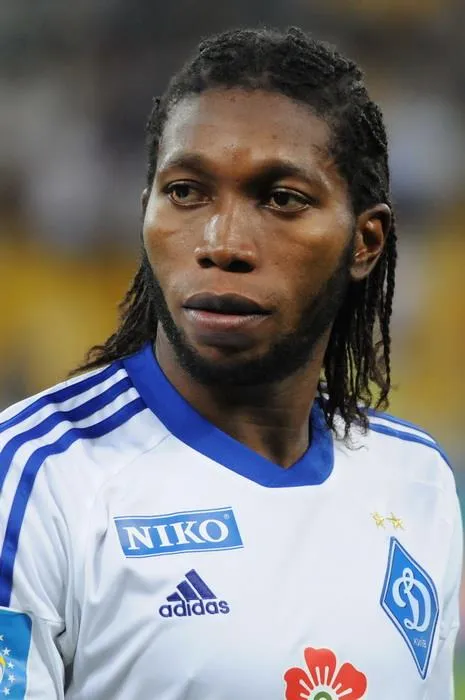
The name means Thank God. In French, Dieumerci translates directly and without ceremony: Dieu, God. Merci, thank you. Dieumerci Mbokani's parents gave him the name at birth in Kinshasa on November 22, 1985, in a city where football was the closest thing most people had to a guaranteed daily experience of joy. He would go on to score 254 professional goals across a career that ran from Bel'Or in Kinshasa to Noah FC in Armenia, passing through Standard Liège, Anderlecht, Monaco, VfL Wolfsburg, Dynamo Kyiv, Norwich City, Hull City, Antwerp and Beveren along the way. He scored 122 goals in the Belgian Pro League, a record for a Congolese player in European football. He scored 22 goals in 49 appearances for DR Congo, the all-time record for the Leopards. He retired in 2024. He is the greatest Congolese footballer the game has produced. The argument runs through several names before reaching him, but it reaches him.
Kinshasa, Bel'Or and TP Mazembe
Mbokani grew up in Kinshasa, the largest city in sub-Saharan Africa, a city of approximately 17 million people built on the south bank of the Congo River where football is played on every available surface because there are no other surfaces. He signed with Bel'Or as a youth and was the league's top scorer in his debut professional season in 2004 with 16 goals. The number made people look. TP Mazembe, the most powerful club in Congolese football, the institution that has won more CAF Champions Leagues than any other club in the history of the competition, looked specifically. Mbokani joined Mazembe in 2005 and scored 67 goals in 72 appearances across two seasons, a return that would have attracted European attention from clubs considerably more prominent than the one that eventually came first.
It was Anderlecht who came, on loan in January 2007. He scored four goals in nine appearances, including a hat-trick against Beveren, and helped Anderlecht win the Jupiler Pro League title in 2006-07. The loan ended. The next move was a permanent one: Standard Liège, on a deal that placed him in a club with genuine continental ambitions and a squad structured to support a centre-forward who could carry the goalscoring responsibility alone. He scored 39 goals in 87 appearances for Standard across three seasons, won two Belgian Pro League titles, and established himself as the most productive African striker in Belgian football at that point in the competition's history.
The Belgian Prime and the Anderlecht Return
The peak of Mbokani's career runs across two distinct Belgian chapters separated by a brief excursion to Monaco and a loan to Wolfsburg. He returned to Anderlecht permanently in 2011 for a reported fee of three million euros and across his second spell scored 33 goals in 53 appearances, adding a further three Pro League titles to the one he had won on loan in 2007. The 2012-13 season was the specific high point: 27 goals in 38 games, the Belgian Golden Boot, the Ebony Shoe for the best African player in the league. He was 27 years old. The Belgian league's most complete striker, at the peak of his powers, operating with the efficiency of a player who understood exactly what his game required and delivered it without variation or hesitation.
The Dynamo Kyiv move in 2013 took him to Ukraine, a league outside the top five but one where he continued to score at a rate that maintained his market value. Two Premier League loan spells interrupted the Kyiv years: Norwich City in 2015-16, where he scored seven goals in 29 Championship appearances as the club was relegated from the Premier League, and Hull City in 2016-17, where he made 12 appearances in a season that ended in another relegation. The English chapters of his career were not where his goals came most readily. Belgium was where he understood the game and the game understood him. He returned to Belgium with Antwerp in 2018 and scored 43 goals in 91 appearances across three seasons, a return that confirmed, well into his thirties, that the specific qualities making him difficult to defend in the Belgian context had not diminished with age.
The Leopards and What DR Congo Gets From Him
Mbokani represented DR Congo from 2005 to 2022, a span of seventeen years that produced 49 international caps and 22 goals, the all-time scoring record for the Leopards. The national team context is the dimension of his career most difficult to evaluate through conventional statistical methods, because DR Congo's international trajectory across those seventeen years oscillated between periods of genuine continental competitiveness and periods of qualified dysfunction. He won the AFCON in 1974 as Zaire, but that was the generation before his. His own AFCON record includes two tournaments, 2013 and 2015, in which he was the squad's most prominent attacking presence. At AFCON 2015, he was among the competition's top scorers. The Leopards did not go beyond the quarter-finals in either edition, but Mbokani's contribution in both was the specific reason they reached as far as they did.
He captained the side in the final years of his international career and retired from international football in 2022 at 36 years old, leaving the record of 22 goals to whoever comes next. Chancel Mbemba holds the caps record with 113, a different kind of durability. But it is Mbokani who holds the goalscoring record, and in a country where the Leopards shirt generates the kind of national pride that political instability has made more fragile rather than less, the all-time goalscoring record is the most specific form of sporting permanence available.
The Argument and Why It Ends Here
The conversation about DR Congo's greatest player runs through several serious names. Mulamba Ndaye, who scored nine goals in a single AFCON in 1974, the all-time record for a single edition that still stands. Shabani Nonda, the striker who scored goals in Serie A for AS Monaco and reached European final competition. Lomana Lua Lua, the pacey winger whose Premier League years at Newcastle and Portsmouth introduced English football audiences to Congolese talent. Cedric Bakambu, the Spanish-based forward who was for a period the most expensive African player in history when Beijing Guoan signed him from Villarreal. Each argument for each player is genuine and traceable through specific moments and records. Mbokani's counter-argument is the accumulation: 254 professional goals, 122 in the Belgian Pro League, the all-time Leopards scoring record, the Belgian Golden Boot, the CAF Player of the Year nomination, seventeen years at the top of the professional game. No Congolese player in history has sustained European productivity at the level Mbokani maintained from 2007 to 2021. That is the argument. It is the strongest available. Thank God for football. And thank football for Mbokani.