Table of Contents
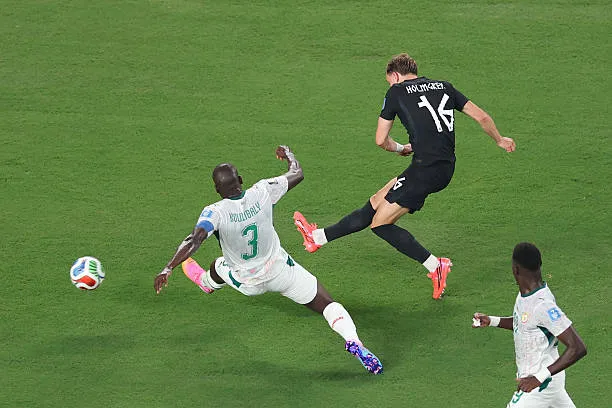
Sadio Mane flicked the ball first time to Ismaila Sarr, who finished acrobatically on the edge of the box to pull Senegal back within one goal. It was the kind of team move that captures everything good about this Senegal generation: vision, movement, composure under genuine pressure. It came five minutes after Erling Haaland had put Norway 3-1 ahead with a blistering finish into the top corner, the product of a four-on-two counter-attack led by captain Martin Odegaard that Senegal's exhausted defence could not contain. Senegal never stopped fighting on Tuesday at the MetLife Stadium. They lost anyway, 3-2, and their World Cup is over.
The match had started with Norway taking a sloppy Senegalese defensive lapse and converting it through Pedersen late in the first half. Norway extended their advantage early in the second half through Haaland's opportunist finish, and the situation appeared to be slipping away entirely before Sarr's first goal, the product of Idrissa Gana Gueye finding Mane and Mane's brilliant first-time flick, brought Senegal back to 2-1. Three minutes into the second half restart, Haaland's counter-attacking strike restored Norway's two-goal cushion. Senegal responded again. Nicolas Jackson created space through the heart of Norway's defence to find Sarr for his second goal of the night, an excellent finish that brought Senegal back to 3-2 and gave their travelling support genuine hope of an unlikely point.
What This Result Means
Norway held on. The win sends them into the knockout stage and sets up a meeting with France for top spot in Group I, with both nations now level on results that matter far more than Senegal's. For Pape Thiaw's side, the defeat is their second in two matches, following the 3-1 loss to France in their opener where they led for an hour before missing two clear chances that could have changed everything. Senegal now face Iraq in their final group match needing what Bleacher Report's live coverage described as a heavy-margin win to have any realistic chance of advancing as one of the eight best third-placed teams. That mathematical possibility exists. It is not a likely one.
The defeat carries specific weight for Kalidou Koulibaly, who has spoken throughout this tournament about this being his final World Cup. The veteran centre-back organised Senegal's defensive line across both matches with the composure that has defined his career, but twice in two games his side has conceded three goals to opponents playing with greater attacking efficiency. Senegal were competitive in both matches, genuinely competitive, against France and Norway. Competitive was not enough.
Sarr's Night and the Bigger Picture
Ismaila Sarr's two goals were the individual highlight of Senegal's tournament so far, a player whose World Cup had begun with the painful memory of an open-goal miss against France now responding with two genuinely excellent finishes against Norway. His performance, alongside Mane's continued creative influence and Jackson's movement in behind, confirms that this Senegal squad has not lacked quality. What it has lacked, across both matches, is the conversion rate and defensive solidity required to turn competitive performances into points against European opposition operating at full intensity.
The Iraq match on June 26 in Toronto is now a matter of pride rather than realistic progression for most scenarios. Senegal arrive at the World Cup carrying the unresolved weight of the AFCON 2025 title dispute, a squad that has wanted this tournament to be remembered for football rather than politics. The football, across two matches against quality opposition, has been better than the results suggest. It will not be enough to extend Koulibaly's final World Cup beyond the group stage barring an extraordinary swing in goal difference and results elsewhere in the group.