What happens when the governing body of an entire continent’s most beloved sport is drowning in debt, losing commercial partners, and battling credibility crises? By early 2021, African football faced exactly that reality. The Confederation of African Football (CAF) was burdened by severe financial instability, governance controversies, and declining trust from broadcasters and sponsors. For many observers, the question was no longer whether reform was needed, but whether the institution could recover at all.
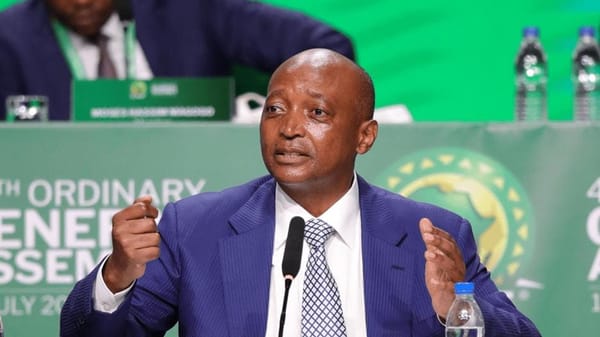
Into that uncertainty stepped Patrice Motsepe, elected CAF president in March 2021. Often described as a stabilizing force at a moment of crisis, Motsepe’s leadership quickly focused on restoring financial discipline, rebuilding commercial confidence, and strengthening governance standards. Five years later, the results are becoming increasingly visible. CAF is regaining stability, competitions are attracting greater investment, and African football is steadily reclaiming its influence on the global stage.
In 2026, the transformation underway reflects a leadership approach that has begun reshaping the future of the game across the continent.
Financial Stability and Institutional Recovery
One of the most immediate challenges Motsepe inherited was CAF’s financial crisis. According to a report by BBC Sport Africa in October 2024, CAF began Motsepe’s tenure carrying a deficit estimated between $40 million and $50 million. The situation was worsened by a $50 million settlement payment to French media company Lagardère, following the cancellation of a major broadcast contract under the previous administration.
However, CAF’s financial recovery began quickly under Motsepe’s leadership. The same BBC Sport Africa report revealed that by the 2022–2023 financial year the deficit had been reduced to just under $10 million, showing a dramatic improvement in CAF’s financial position.
Motsepe emphasized that restoring trust with commercial partners was central to rebuilding CAF’s finances. Speaking to BBC Sport Africa, he explained:
“The most important thing is to give confidence to the sponsors, partners and people that put money into football.”
This statement highlights a key leadership principle: financial credibility attracts investment. By prioritizing transparency and stability, Motsepe helped rebuild confidence among broadcasters, sponsors, and stakeholders. The result has been renewed commercial engagement across African football.
Returning CAF to Profitability
Financial stability soon evolved into full profitability. According to an official CAF financial report released at the 47th CAF Ordinary General Assembly in Kinshasa in October 2025, CAF recorded a net profit of $9.48 million for the 2023–2024 financial year, marking the first time in several years that the organization had returned to positive financial performance.
The same CAF report also revealed that CAF’s total revenue reached $166.42 million, driven largely by increased sponsorship agreements and improved broadcast partnerships.
This turnaround demonstrates the success of the strategic reforms introduced under Motsepe’s leadership. By implementing strict financial controls and strengthening commercial partnerships, CAF transformed from a deficit-ridden organization into a profitable governing body.
The financial report explained the broader significance of this recovery, stating:
“This turnaround reflects CAF’s strengthened commercial strategy and commitment to ensuring that financial growth directly benefits players, clubs and Member Associations.”
The emphasis on reinvesting profits into football development ensures that financial growth translates directly into better infrastructure, youth academies, and stronger domestic leagues across the continent.
Expanding Prize Money and Club Investment
One of the most visible benefits of CAF’s financial recovery has been the dramatic increase in prize money across continental competitions, a shift designed to strengthen the financial foundations of African clubs.
According to the CAF financial report presented at the 2025 CAF General Assembly, the winners of the CAF Champions League now receive $4 million, representing a 60% increase. For many African clubs operating with limited domestic broadcasting revenues, this prize money can significantly strengthen club budgets, allowing teams to retain top players longer and invest more consistently in youth development structures.
The report also revealed that the total prize pool for the competition has risen to $17.6 million, expanding the financial rewards distributed across participating clubs. This broader distribution helps ensure that teams reaching the later stages of the tournament benefit financially, strengthening competitiveness across multiple national leagues rather than concentrating wealth in a small number of dominant clubs.
Prize money for the CAF Super Cup has also increased by 150% to $500,000, a significant rise for a competition that historically carried more symbolic prestige than financial reward. The increase signals CAF’s intention to elevate the status of the fixture while providing additional financial incentives for clubs competing at the highest level of African football.
Meanwhile, prize money for the African Nations Championship (CHAN) has increased by 32% to $10.5 million, with the tournament winners receiving $3.5 million. Because CHAN exclusively features players from domestic leagues, the increased prize fund provides direct financial support to local football systems and reinforces CAF’s efforts to strengthen domestic competitions across the continent.
These increases have major implications for African clubs. Stronger financial incentives help teams strengthen their squads, invest in infrastructure, and compete more effectively in continental competitions. By directing more money into competitions, Motsepe’s administration is strengthening the competitive ecosystem of African football and ensuring that CAF’s financial recovery translates into tangible benefits for clubs, players, and domestic leagues.
Governance Reform and Ethical Leadership
Beyond financial reforms, Motsepe has placed a strong emphasis on governance and integrity. African football’s reputation had been damaged by corruption scandals under previous administrations, making governance reform essential for rebuilding trust.
Speaking to BBC Sport Africa, Motsepe made his stance on integrity clear:
“The zero tolerance of corruption and bribery in football will transcend to zero tolerance of bribery and corruption in politics, in business and on the African continent.”
This quote illustrates how Motsepe sees football governance as part of a larger institutional transformation. By implementing stricter compliance standards and emphasizing ethical leadership, CAF has strengthened its credibility among international stakeholders.
Another symbolic decision reinforcing this commitment to reform is Motsepe’s refusal to draw a salary as CAF president. According to BBC Sport Africa, he instead redirects those funds toward women’s football development, staff bonuses, and emergency football initiatives.
This gesture signals that his leadership is driven by long-term development rather than personal financial gain, further strengthening confidence in CAF’s administration.
Strategic Competition Reforms
Motsepe has also introduced structural changes aimed at improving the competitiveness and sustainability of African football competitions.
One of the most significant decisions concerns the scheduling of the Africa Cup of Nations (AFCON). According to The Athletic, in a January 2026 analysis, President Patrice Motsepe announced that AFCON will transition from a two-year cycle to a four-year cycle after the 2028 tournament.
Motsepe described the decision as part of a broader transformation in African football. During the announcement in Rabat, he explained that the change would usher in what he called a “historical era” for the tournament.
The longer cycle allows CAF to focus on improving tournament quality, increasing commercial value, and reducing scheduling conflicts with European leagues. However, the proposal has not been without debate.
Writing in The Athletic in January 2026, journalist Tom Bogert noted that critics of the change argue the traditional two-year cycle has historically provided African football with more regular global visibility and more frequent competitive opportunities for smaller nations whose players rarely reach major European club competitions.
These competing considerations reflect the genuine tension at the heart of the decision. Proponents of the four-year cycle argue it raises the tournament’s commercial and sporting prestige; opponents argue it reduces the pipeline of competitive football for the continent’s less prominent national teams.
Strengthening Commercial Partnerships
Another major achievement of Motsepe’s leadership is CAF’s improved commercial profile.
According to the CAF financial report presented in Kinshasa in 2025, the organization now has 16 official sponsors and commercial partners, reflecting the growing global interest in African football.
The report stated:
“These agreements reinforce CAF’s mission to deliver world-class competitions and enhance football’s commercial value across the continent.”
This expansion in sponsorship demonstrates how governance reform and financial stability have restored confidence in African football as a viable commercial platform.
Stronger partnerships mean greater investment in competitions, improved broadcast coverage, and better development programs for players across the continent.
The 2026 Legacy of Patrice Motsepe’s Leadership
By 2026, Patrice Motsepe’s leadership has done more than stabilize African football’s governing structures; it has redefined what effective football governance on the continent can look like.
The financial recovery of CAF, renewed commercial partnerships, and expanded investment in competitions signal the emergence of a more confident and institutionally stable era for the sport. Yet the true significance of these reforms lies in what they make possible for the future.
If sustained, the structural changes introduced under Motsepe could allow African football to retain more of its talent, strengthen domestic leagues, and compete more assertively within the global football economy.
The challenge now is continuity. African football has seen moments of promise before, only for progress to stall through mismanagement and instability. Whether Motsepe’s reforms become a lasting legacy will depend on whether the systems he has introduced continue to prioritize transparency, financial discipline, and long-term development. What is clear in 2026, however, is that African football is no longer defined by crisis management, but by the possibility of sustained growth and global relevance.


Related News
Six VAR Controversies That Shaped African Football
Mar 08, 2026
The 7 Biggest Football Broadcasters in Africa in 2026
Mar 02, 2026
Top African Clubs with the Most Expensive Shirt Sponsorship Deals in 2026
Mar 02, 2026