
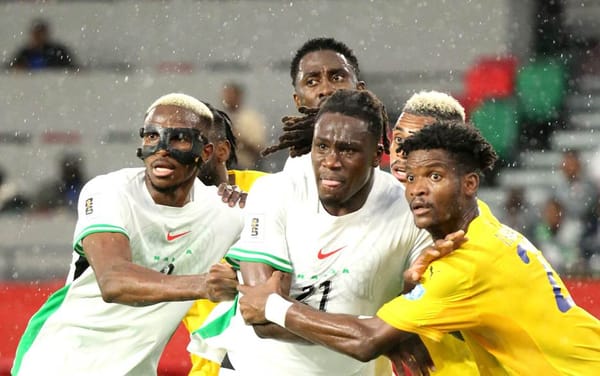

Nigeria has called on FIFA to investigate whether some players used by DR Congo in the 2026 World Cup African play-off final were eligible to participate
The absence of Nigeria and Cameroon from the 2026 FIFA World Cup is not just a shock result. It is a moment that forces African football to confront deeper questions about structure, consistency, and competitiveness at the highest level. For decades, both nations have defined Africa’s presence on the global stage, bringing talent, passion, and identity to the tournament. Yet in a qualification cycle filled with tension, controversy, and decisive moments, both teams fell short. Their eliminations were not sudden accidents. They were the result of specific matches, key decisions, and underlying issues that have been building over time within African football.
The Matches That Changed Everything
Nigeria’s World Cup dream ended on November 16, 2025, in Rabat, Morocco, in a dramatic playoff final against DR Congo. The match finished 1-1 after extra time before DR Congo secured a 4-3 victory on penalties, a result detailed in match coverage from ESPN.
Frank Onyeka had given Nigeria the lead, but Meschack Elia equalised to force the game into a tense shootout. In those final moments, Nigeria’s fate slipped away once again, marking their second consecutive failure to qualify for the World Cup.
Cameroon’s exit came earlier, on November 13, 2025, also in Rabat. As outlined in a match report from CAF Online, DR Congo defeated Cameroon 1-0, with Chancel Mbemba scoring a stoppage-time winner to end the Indomitable Lions’ campaign at the semifinal stage.
Two matches, separated by just three days, removed two of Africa’s football giants from the road to the World Cup.
Nigeria’s Collapse Under Pressure
Nigeria’s elimination was not just about one match. It was the culmination of a campaign that never found stability. Analysis from SuperSport indicates that the team struggled throughout the qualifiers, failing to establish a clear identity or maintain consistent performances.
Rather than controlling matches as they historically have, Nigeria often reacted to opponents and dropped points in situations where they were expected to dominate. Despite the presence of top players competing in Europe, the team lacked cohesion and struggled to build sustained momentum.
The psychological weight of expectation also played a role. Nigeria is not just a football team. It is a symbol of national pride for over 200 million people. Missing one World Cup raises concern. Missing two in a row creates a crisis.
Controversy and Accusations
Following the defeat to DR Congo, Nigeria’s head coach Éric Chelle sparked controversy with comments that drew global attention. ESPN reports that speaking after the penalty shootout, he claimed, “During all the penalty decision the guy from Congo did some Voodoo. Every time.”
The remarks reflected frustration, but they also shifted focus away from deeper structural issues within the team.
Off the pitch, the Nigeria Football Federation pursued a legal challenge. Coverage from BBC Sport shows that Nigeria alleged “fraud” in DR Congo’s squad selection, arguing that certain players were ineligible due to dual nationality rules.
In that report, NFF general secretary Mohammed Sanusi said, “There is what we consider to be a breach of regulations. We are saying it was fraudulent.”
However, this effort ultimately failed. ESPN confirms that FIFA rejected Nigeria’s protest on March 17, 2026, maintaining that the players met eligibility requirements under its regulations.
Sanusi reacted to the decision by stating, “We have received the decision of the FIFA Disciplinary Committee on our petition, but we are not satisfied,” as detailed in the same ESPN coverage.
These developments underline a key point. Nigeria’s failure extended beyond the pitch into administrative and legal battles that could not reverse the result.
Cameroon’s Missed Opportunity
Cameroon’s exit may have been less dramatic, but it was equally significant. The Indomitable Lions were eliminated on November 13, 2025, by a single moment of lost concentration in stoppage time, falling 1-0 to DR Congo in Rabat, as detailed by CAF Online.
Details from that report show that Cameroon had created clear chances earlier in the game, including a major opportunity missed by Bryan Mbeumo in the 65th minute, but failed to convert them. The inability to take those chances ultimately proved costly.
In the buildup to that decisive match, head coach Marc Brys had expressed confidence in his squad despite off-field tensions. SuperSport reports that he said, “The group is mature and competent enough to handle the situation. It is not the first time for many, and I am 100 per cent sure that we will be ready if the mentality is good and if the passion and enthusiasm are present from the beginning.”
That emphasis on mentality and passion makes the eventual outcome even more striking. Cameroon showed flashes of quality, but when the defining moment arrived late in the match, they were unable to respond.
Additional analysis from BBC Sport describes the encounter as tense and tactical, with Cameroon struggling to impose themselves in the final third despite periods of attacking promise.
At this level, small margins define outcomes. Cameroon’s inability to capitalize on key moments, despite the coach’s belief in their readiness, proved decisive.
A Pattern of Structural Issues
For both Nigeria and Cameroon, these results point to deeper structural problems rather than isolated failures.
In Nigeria’s case, analysis from SuperSport suggests that coaching instability, tactical inconsistency, and administrative challenges all contributed to the team’s struggles. The issue was not a lack of talent, but the absence of a clear system and long-term planning.
Cameroon faces a similar reality. While the squad still contains high-level players, the team’s inability to convert chances and maintain focus in decisive moments reflects gaps in preparation and tactical discipline.
At the highest level of international football, systems matter more than individual brilliance. Both nations entered the qualification with strong squads but lacked the cohesion required to succeed.
What This Means for African Football
The absence of Nigeria and Cameroon from the 2026 World Cup has implications far beyond the two teams.
These are not just participants. They are pillars of African football identity. Their absence changes how the continent is represented on the global stage.
Nigeria brings flair, attacking energy, and one of the largest fan bases in world football. Cameroon carries a legacy built on historic performances and iconic players. Without them, the World Cup loses part of Africa’s footballing story.
At the same time, their failure highlights the increasing competitiveness of African qualifications. Teams like DR Congo are no longer outsiders. They are organized, disciplined, and capable of defeating traditional giants.
This shift reflects growth within African football, but also exposes the consequences of stagnation among its biggest nations.
The way forward
For Nigeria and Cameroon, the path forward demands more than reflection; it requires structural reform. Stability in coaching, clearer tactical identity, and stronger administrative cohesion must become priorities before the next qualification cycle. At the same time, DR Congo’s rise signals a broader shift in African football, where organization and long-term planning are beginning to outweigh historical reputation. The balance of power is changing, and unless traditional giants evolve, they risk being left behind in a continent that is no longer waiting for them to lead.
Related News
Cape Verde at the World Cup: the smallest nation on Africa’s biggest stage
Apr 10, 2026
CAF Viewership Up 61% at AFCON 2025, But Is African Football Really Making Money?
Apr 10, 2026
Football, Politics, and the African Coaching Carousel: The Story Behind Rhulani Mokwena’s Algiers Arrest
Mar 31, 2026