
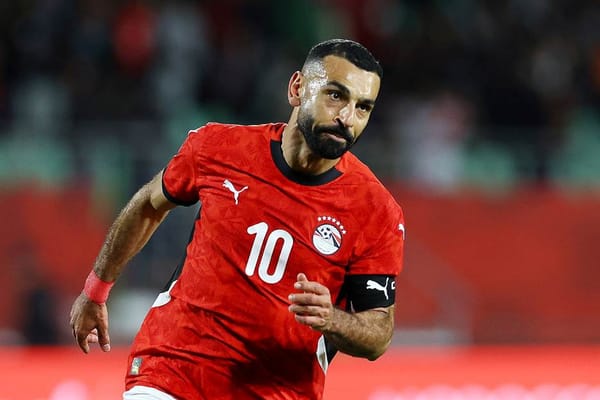

As Africa prepares for the expanded 2026 FIFA World Cup, the question of where its goals will come from carries real weight. For nearly a decade, Mohamed Salah has been central to that conversation, combining elite consistency with decisive performances for Egypt on the international stage. His record in World Cup qualification and his influence in high-pressure matches have made him one of the continent’s most dependable attacking figures.
Yet African football is no longer defined by a single name. Across the continent, a new wave of forwards is emerging, supported by stronger team structures and deeper squads. Senegal, Algeria, and Ghana all approach the tournament with attacking options that reflect this growing depth. The issue is no longer simply about individual brilliance, but about how it fits within collective systems capable of competing globally.
The central question now is whether Salah remains Africa’s most decisive forward heading into the 2026 World Cup, or whether the continent’s strength lies in its expanding pool of attacking talent.
Salah’s unmatched numbers and influence
Salah’s credentials are undeniable. According to FIFA’s official report titled Salah's heroics fuel Egypt's World Cup dream, he became the all-time leading scorer in African World Cup qualifying with 20 goals, surpassing legends such as Didier Drogba and Samuel Eto’o. In the same report, FIFA notes that he has scored 63 goals in 108 international matches, underlining his consistency at the highest level.
His influence extends beyond numbers. FIFA highlights how Salah led Egypt to consecutive World Cup qualifications, including sealing qualification for 2026 with a decisive performance against Djibouti. That ability to deliver in defining moments is central to his reputation.
Egypt head coach Hossam Hassan reinforced this status when speaking to Goal.com, where he described Salah as “a role model for all success seekers,” while praising his sustained excellence in elite football. In the same statement, Hassan emphasized that maintaining top performance over years is far more difficult than reaching the summit, pointing to Salah’s longevity as a defining trait.
The AFCON debate shaping his legacy
However, Salah’s legacy is not without debate. Writing for ESPN, Egyptian pundit Ahmed Atta argued that the forward’s greatness should not be reduced to trophies alone, explaining that “it’s a very superficial opinion for many people to think that a trophy can decide whether a player deserves a certain status,” while comparing Salah’s situation to Lionel Messi before his international triumphs.
Yet others remain unconvinced. In the same ESPN report, sports editor Haytham Mohamed insisted that “for Africa, winning the AFCON is always special, all the great players have won it, so he needs to.” This perspective reflects a broader sentiment within African football, where continental success remains a key benchmark for greatness.
Even so, Salah continues to produce when it matters. The same report highlights that during the 2025 AFCON, he scored in each of the three matches he featured in, including decisive goals, underlining his ability to influence games under pressure and keep Egypt competitive even against stronger or more balanced sides.
Strong challengers across the continent
Still, focusing solely on Salah risks overlooking the depth of attacking talent across the continent.
Sadio Mané remains a central figure in Senegal’s attacking structure heading into the 2026 World Cup. According to African Top Sports, he scored five goals during qualification and played a decisive role in Senegal’s AFCON success, where he was named Player of the Tournament. His leadership and experience continue to define one of Africa’s most consistent national teams.
Mané’s importance is not only reflected in external praise but in his own understanding of his role. Speaking to CAF Online, he emphasized responsibility and mentality in high-pressure environments: “It’s important to show character, especially for the younger players… That is my role — to lead as a senior by example, in training and during the game.” This perspective reinforces his influence beyond goals, positioning him as both a leader and stabilizing force within the squad.
Senegal coach Pape Thiaw, speaking to Al Jazeera, echoed this significance, stressing that “there is a whole people behind him.” Together, these perspectives highlight Mané not just as an elite forward, but as a symbol of continuity and leadership within Senegalese football as they prepare for another World Cup campaign.
Defender Moussa Niakhate added further insight in the same Al Jazeera report, describing Mane as “an exceptional player who would have deserved to win a Ballon d’Or… above all, he is just an incredible man.” Such praise from within the squad reinforces the idea that Mane’s influence extends beyond statistics into leadership and national identity.
The rise of new attacking forces
Another emerging name is Algeria’s Mohamed Amoura. According to African Top Sports, Amoura finished as the top scorer in African World Cup qualifiers with 10 goals and has registered 19 goals in 42 international appearances. These numbers mark him as one of the continent’s most dangerous rising forwards.
Amoura himself offered insight into his mentality when speaking to CAF Online. In that interview, he stated that Algeria “respect everyone but fear no one,” emphasizing the confidence driving this new generation of players. He also credited his form to “hard work and the confidence the coach and my team-mates give me,” highlighting the collective structure behind his individual success.
Ghana’s Jordan Ayew also represents a different dimension of attacking leadership. In comments reported by ModernGhana, Ayew emphasized the foundation behind Ghana’s return to the global stage: “It is teamwork, not about one person. We gathered ourselves and made sure we were ready for the task.” He further described qualification as “a huge mountain to climb,” achieved through unity between players, technical staff, and federation leadership. This framing is significant in the broader African context. While Salah, Sadio Mané, and emerging forwards like Mohamed Amoura bring individual firepower, Ayew’s account highlights a structural shift: African teams are increasingly built on cohesion, preparation, and shared responsibility. Ghana’s qualification campaign, therefore, reinforces the idea that success at the 2026 World Cup may depend as much on collective systems as on standout attacking talent.
A stronger African football landscape
The broader context of African football further complicates the debate. Speaking during AFCON, Hossam Hassan described the tournament as a “ferocious” competition and noted that the continent is now filled with “world class players… not only the experienced players but also youngsters, who have match-winning ability and an incredible skill set,” as reported by Supersport. This observation reflects the growing depth and quality across African squads.
In this evolving landscape, Salah remains the most proven figure. His experience, goal-scoring record, and ability to carry Egypt through qualification campaigns make him the focal point of Africa’s World Cup hopes. African Top Sports notes that he scored nine goals in the 2026 qualifying campaign alone, further reinforcing his importance.
Conclusion: One star or a generation?
Yet football at the World Cup level rarely depends on one player. Senegal’s structure around Mane, Algeria’s emerging attacking force led by Amoura, and the collective resilience of teams like Ghana suggest that Africa’s challenge in 2026 will be shared.
Ultimately, Salah represents both Africa’s past achievements and its present ambitions. He is the established icon, the player who has already conquered Europe and continues to deliver for his country. But he is no longer alone.
If Africa is to achieve a historic breakthrough at the 2026 World Cup, it may not come from a single star, but from a generation. Salah may still be the continent’s brightest hope, but he is no longer alone.
Related News
From Gomaa to Koulibaly: The Greatest Centre-Back Partnerships in African Football
Mar 16, 2026
The 10 Greatest African Pundits in 2026
Mar 03, 2026
Top 10 African Female Footballers to Watch at WAFCON 2026
Feb 21, 2026