
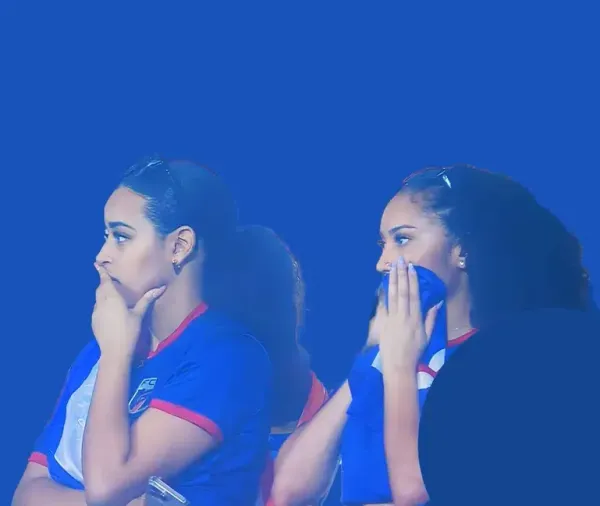

On an October night in Praia, history arrived not with a whisper, but with a roar. As the final whistle blew and the scoreboard confirmed a 3–0 victory over Eswatini on 13 October 2025, an entire nation of just over half a million people erupted in celebration. For Cape Verde, qualification for the 2026 FIFA World Cup was not just a sporting milestone; it was a moment that redefined what is possible in African football.
Across a continent where traditional powerhouses have long dominated the global stage, Cape Verde’s rise offered something different: a story of persistence over pedigree, unity over size, and belief over history. In a qualification landscape that often favors nations with deeper resources and larger talent pools, the island nation’s triumph stood as a powerful reminder that African football is evolving. It signaled a shift, where emerging teams are no longer content with participation but are now shaping the narrative. In that moment, Cape Verde did not just qualify; they inspired a continent.
A win that changed everything

Cape Verde’s qualification was sealed in emphatic fashion. Goals from Dailon Livramento, Willy Semedo, and veteran defender Stopira ensured a comfortable 3–0 win in front of a packed 15,000-capacity National Stadium in Praia, a result that confirmed top spot in Group D and a historic ticket to the global showpiece, as detailed in coverage by BBC Sport.
That victory did more than secure qualification. It cemented Cape Verde’s place in football history as the second-smallest nation ever to reach the World Cup, behind Iceland, with a population of approximately 525,000 people according to World Bank estimates cited by BBC Sport. Additional reporting by ESPN notes that only Iceland 2018 and Curaçao 2026 debutants rival such small population sizes among World Cup qualifiers.
For a country that only gained independence in 1975 and first attempted qualification in 2002, the journey has been nothing short of extraordinary.
The night Praia stood still
The importance of the moment extended far beyond the pitch. In anticipation of the decisive match, the government granted citizens time off work, allowing the nation to collectively witness history unfold, a detail highlighted in reporting by Goal.
Across Praia, fans flooded stadiums, streets, and viewing areas. According to The Guardian, celebrations spilled into the night as thousands gathered, sang, and danced, transforming the capital into a sea of blue and white. President José Maria Neves, who attended the match, later likened the achievement to a defining national milestone, placing it alongside independence itself in symbolic importance.
The scenes captured the emotional weight of the moment. This was not just football. It was identity, pride, and history converging in a single evening.
How the Blue Sharks defied the odds
Cape Verde’s rise has not been built on star power or financial might. Instead, it has been driven by structure, unity, and a carefully cultivated football identity.
The team, nicknamed the Blue Sharks, finished top of their qualifying group ahead of traditional powerhouse Cameroon, a result underlined by a crucial 1–0 victory over the Indomitable Lions earlier in the campaign, as outlined in reports from Pulse Sports.
Their journey was not without setbacks. A dramatic 3–3 draw away to Libya nearly delayed qualification, but Cape Verde responded with composure when it mattered most, finishing the job decisively against Eswatini.
Speaking about the campaign, defender Roberto Lopes emphasized the importance of mentality and timing. “Traditionally, it's been difficult to qualify for the World Cup, especially in Africa, where you had to finish first,” he explained in comments carried by Goal. “This time, if you finish first, you're in. The motivation to be first and hold on to that has been crucial.”
That clarity of purpose proved decisive. Cape Verde did not stumble into qualification; they seized it.
A team built across oceans
One of the most remarkable aspects of Cape Verde’s success lies in how the team itself is constructed. With limited domestic resources and a small local league, the national side has leaned heavily on its diaspora, players born or raised abroad but connected to the islands through heritage.
According to The Guardian, a significant portion of the squad is drawn from communities in Portugal, France, and the Netherlands, often referred to as the country’s “11th island.” This global network has allowed Cape Verde to assemble a competitive squad despite its size.
The sense of unity within the team has been key. Lopes, speaking to ESPN, described the atmosphere in the dressing room before the decisive match: “On the day of the Eswatini game, I was trying to conserve energy, but my stomach was dancing with nerves… we all started dancing. And then it's like we knew that everything was going to be okay.”
He added that shared culture plays a central role in bonding the squad: “Music is a huge part of the dressing-room atmosphere… we eat Cachupa… It's the national dish, and we eat it together.” These traditions have helped bridge differences and create a cohesive identity.
Built on resilience, not resources
Cape Verde’s footballing rise is also a story of resilience. The country’s geography, a volcanic archipelago with limited natural resources, has historically posed challenges to development. Yet those same constraints have shaped a culture of perseverance.
In a feature by Inside FIFA, local voices highlighted how this resilience translates onto the pitch. Sports journalist Victor Hugo Fortes described the emotional significance of qualification, noting that “just thinking about it gives me goosebumps,” as the nation prepared to potentially crown 50 years of independence with a World Cup appearance.
FIFA development programmes have also played a role. Investment in infrastructure, training facilities, and grassroots football has gradually strengthened the national setup, demonstrating how long-term planning can yield historic results.
Punching above their weight
Cape Verde’s success did not come out of nowhere. The team has steadily built a reputation for exceeding expectations, particularly in continental competitions. They reached the quarter-finals of the Africa Cup of Nations in both 2013 and 2023, signaling their growing competitiveness on the African stage, as documented by BBC Sport.
Their current FIFA world ranking of around 70 further reflects a team that, while not among the elite, has consistently closed the gap on more established football nations.
Still, nothing compares to the scale of the World Cup. The expanded 48-team format has opened doors for emerging nations, but Cape Verde’s qualification is not merely a product of structural change; it is the culmination of years of steady progress.
A new voice on the global stage
When the 2026 World Cup kicks off across the United States, Canada, and Mexico, Cape Verde will step onto the biggest stage in football for the first time. Drawn into a group featuring Spain, Uruguay, and Saudi Arabia, the challenge ahead is immense, as noted by ESPN.
But this is not just a group; it is a defining test of Cape Verde’s place in the global game. Spain arrive as one of the tournament favourites, built on technical precision and control, while Uruguay bring a long-standing reputation for tactical discipline and physical intensity shaped by decades of South American competition. Saudi Arabia, meanwhile, represent a different kind of challenge, a side capable of producing moments of unpredictability, as seen in recent World Cup performances.
For Cape Verde, whose squad blends domestic resilience with a diaspora-driven identity, these matchups will demand adaptation at the highest level. The stylistic contrasts alone present a steep learning curve, exposing the team to footballing cultures rarely encountered in African qualification campaigns.
Progression from the group will be difficult, but that does not diminish the opportunity. Even competing closely, earning points, or producing a defining result would mark a historic step forward. In many ways, the group stage itself becomes the proving ground, a chance not just to participate, but to demonstrate that Cape Verde belongs among the world’s elite.
For African football, it is a reminder that the continent’s depth runs deeper than its traditional giants. For the world, it is a story of possibility.
Related News
Nigeria and Cameroon are missing from the World Cup. How Did African Football Giants Fall?
Apr 10, 2026
CAF Viewership Up 61% at AFCON 2025, But Is African Football Really Making Money?
Apr 10, 2026
Football, Politics, and the African Coaching Carousel: The Story Behind Rhulani Mokwena’s Algiers Arrest
Mar 31, 2026