
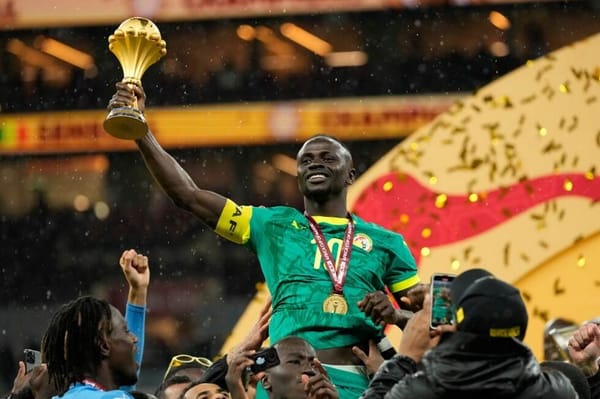

When Senegal lifted the Africa Cup of Nations trophy after their 1-0 victory over Morocco, the result appeared settled on the pitch. That sense of finality did not last. CAF’s decision to overturn the result and award Morocco a 3-0 win transformed a sporting triumph into one of the most significant disputes in recent African football. What followed was not just outrage in Senegal, but a broader debate about how results are judged, who holds authority in the game, and whether decisions made off the pitch can outweigh those made on it.
Senegal’s move to challenge the ruling at the Court of Arbitration for Sport has now shifted the focus beyond the final itself. At stake is not only a title, but the credibility of decision-making structures within African football. The central question is clear: when governing bodies and match officials collide, can CAS deliver a resolution that restores trust in the game?
The controversy: How Senegal lost the AFCON title
The dispute stems from one of the most dramatic finals in AFCON history. Senegal defeated Morocco 1-0 after extra time, with Pape Gueye scoring the decisive goal. However, the match was marred by a 15-minute walk-off by Senegal players protesting a late penalty decision.
According to Supersport, CAF later ruled that Senegal had breached tournament regulations and awarded Morocco a 3-0 victory, effectively stripping Senegal of their title. The decision triggered outrage across Senegal, with the federation insisting the result should stand.
Senegal Football Federation president Abdoulaye Fall, quoted by Supersport, defended the team’s position, stating: “Senegal will remain standing and will legitimately defend this victory on the field which we acquired on the field with the talent of our players.”
The government also escalated the matter. According to BBC, officials called for an “independent international investigation” into what they described as a flawed and unjust decision. This reaction highlights how the issue has grown beyond football into national and political significance.
What is CAS and why does it matter?
The Court of Arbitration for Sport, commonly known as CAS, is the highest legal authority in global sport. Based in Lausanne, Switzerland, it was established in 1983 to resolve disputes related to sport.
According to EA Sports Law, CAS operates in two main ways. First, it acts as a standard arbitration body handling contractual disputes such as sponsorship or transfer disagreements. Second, and more relevant in this case, it serves as an appeals court for decisions made by governing bodies like CAF or FIFA.
For CAS to hear an appeal, certain conditions must be met. The internal processes of the governing body must be exhausted, and the organization must recognize CAS as the final authority. Once a case is accepted, a panel of arbitrators reviews the evidence, hears arguments, and issues a binding decision.
Importantly, CAS decisions are final. As explained by EA Sports Law, rulings can only be challenged in very limited circumstances under Swiss law, making it the ultimate court for sporting disputes.
Why Senegal believes it will win
There is growing belief in some legal and football circles that Senegal’s appeal could succeed. Speaking to ESPN, CAS arbitrator Raymond Hack strongly questioned CAF’s decision, arguing that it contradicts fundamental principles of the game.
Hack stated: “No; not at all, because the referee is the final decision on the game and when he blows the whistle for the end of the game, that's when the game ends.”
He further explained that both teams returned to the pitch and completed the match, including extra time, without formally protesting. This detail is crucial because it weakens Morocco’s case from a procedural standpoint.
Hack also pointed to precedent. Referencing a previous CAF Champions League dispute, he told ESPN: “In my opinion, I don't think the Court of Arbitration will uphold the decision of the Appeal Board because there's precedent to it.”
This reliance on precedent is significant, as CAS often considers past rulings when determining new cases. If similar circumstances previously led to a different outcome, it strengthens Senegal’s argument.
The legal complexity behind CAF’s ruling
CAF based its decision on specific tournament regulations, particularly Articles 82 and 84. These rules address situations where a team refuses to play or leaves the field without authorization.
However, Hack argued in ESPN that these rules may have been misapplied. He explained that Article 84 requires a breach of both Article 82 and Article 83 to justify elimination. In this case, Senegal may have violated one provision but not both.
He clarified this interpretation by stating: “It says both of them, and they certainly never contravened the provisions of article 83.”
This legal nuance could prove decisive. If CAS agrees that CAF incorrectly applied its own regulations, the original result could be reinstated.
At the same time, CAF has defended its position. According to BBC, the organization maintains that its decision was necessary to uphold rules and ensure fairness in competition. CAF president Patrice Motsepe emphasized that disciplinary decisions must be respected and applied consistently.
Conflicting narratives across African football
The controversy has divided opinion across the continent. In Senegal, the decision has been widely rejected, with players and officials insisting the match was won fairly.
Midfielder Idrissa Gueye, quoted by Supersport, expressed frustration with the ruling, saying: “We did what we had to do on the pitch, we won that match.”
He added a striking perspective on the situation, stating: “Titles are won on the pitch, not in offices.”
In Morocco, however, the reaction has been very different. According to Supersport, many fans welcomed the ruling as a fair application of the rules, viewing it as justice rather than controversy.
This divide reflects a broader tension in African football between regulatory authority and sporting merit. While some prioritize strict adherence to rules, others argue that results achieved on the field should carry greater weight.
What happens next?
The CAS process is not immediate. According to ESPN, a final decision could take up to six months, meaning the uncertainty surrounding the AFCON title may continue for some time.
During this period, Senegal will retain their medals and prize money. Hack explained to ESPN that no action can be taken until the arbitration process is complete, reinforcing the principle that CAS decisions are final and binding.
Meanwhile, CAS itself confirmed that proceedings will only begin once an official appeal is filed. In a statement reported by GhanaWeb, the court clarified: “At the time of writing, CAS has not received an appeal by the Senegalese Football Federation.”
This highlights an important procedural step. Even though Senegal has announced its intention to appeal, the formal legal process must still be initiated before the case can move forward.
A defining moment for African football
Beyond the immediate dispute, the evidence suggests Senegal’s case rests on strong legal ground. Raymond Hack, as reported by ESPN, emphasized the authority of the referee and the fact that the match was completed, principles that have historically guided similar decisions. If CAS follows this reasoning, the balance leans toward reinstating the result achieved on the pitch.
More broadly, this case exposes a key tension in African football between regulatory authority and sporting finality. A decision in Senegal’s favour would reaffirm that matches are decided on the field, while upholding CAF’s ruling would strengthen the power of governing bodies to reinterpret results.
In resolving this dispute, CAS will do more than determine a champion. It will define where authority truly lies in African football.
Related News
FIFA Rules and African Football 2026: How Key Laws Could Decide World Cup Matches
Mar 23, 2026
If Arsenal Win the League, Which African Country Will Go the Craziest?
Mar 16, 2026
From Local Factories to Global Giants: Who Supplies Africa's Matchday Footballs
Mar 16, 2026