In Summary
- AFCON 2025 will bring together Africa’s top national teams, with a revised schedule, and a tournament format designed to increase competitiveness and fan engagement.
- The group stage sets the tone, featuring balanced groups, high-profile rivalries, and qualification pathways that reward consistency while allowing room for surprise contenders.
- Fixtures are spread across key stadiums and host cities, highlighting infrastructure development, regional representation, and logistical planning aimed at smooth tournament delivery.
- AFCON 2025 is positioned as both a football showcase and a continental event, blending sporting excellence, cultural celebration, and Africa’s growing influence in global football.
Deep Dive!!
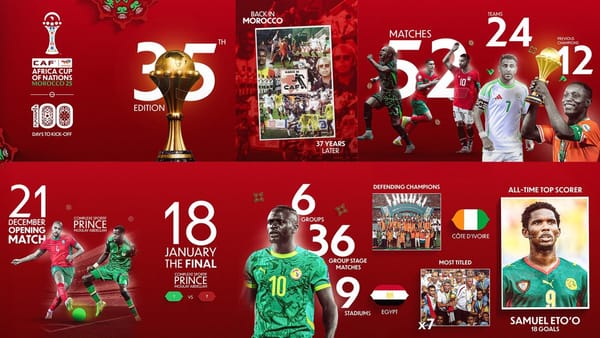
Wednesday, 17 December 2024–The Africa Cup of Nations 2025 (AFCON) is poised to be one of the most compelling editions in recent memory, running from 21 December 2025 to 18 January 2026 in Morocco, a host nation with a deep footballing tradition and modern infrastructure ready to welcome the continent’s best teams. This 35th edition of Africa’s flagship national team tournament features 24 teams divided into six groups of four, underscoring a format designed to balance competitive drama with logistical clarity. The expanded 24 team setup gives nations across Africa the chance to compete at the highest level, with group stage matches feeding into a knockout phase that culminates in a grand final at Rabat’s iconic Prince Moulay Abdellah Stadium.
As one of the few major international tournaments held over the Christmas and New Year period, AFCON 2025 captures broad attention across the continent and beyond, with the festive dates adding extra energy and global viewership to the matches. The Confederation of African Football (CAF) finalised group draws earlier in 2025, setting the stage for intriguing rivalries, rich tactical narratives and the chance for emerging talents to shine on a stage shared with seasoned internationals. Morocco’s hosting is a strategic home advantage that combines passionate local support with venues spread across six cities, offering varying climates, cultural backdrops and footballing atmospheres that enhance the tournament’s richness.

Tournament Format and Group Details
AFCON 2025 retains the widely embraced 24 team format that has been in place since 2019, with nations drawn into Groups A through F. Each group features four teams that play round robin matches, with the top two teams from each group plus the four best third placed teams advancing to the Round of 16, followed by quarter finals, semi finals and the final. This structure ensures competitive balance, allows for tactical variety and gives underdog nations the opportunity to progress deep into the tournament.
Group compositions reflect a mix of established powerhouses and emerging competitors. For example, Group A pairs hosts Morocco with Mali, Zambia and Comoros, promising both home advantage and high stakes tactical battles. Group B features traditionally strong sides Egypt and South Africa alongside Angola and Zimbabwe, while other groups include combinations such as Nigeria, Tunisia and Uganda in Group C, and Senegal and DR Congo in Group D. These matchups set up compelling early storylines and ensure that every group stage match carries strategic significance.
Fixture Schedule and Key Dates
The tournament kicks off on 21 December 2025, with the opening match pitting Morocco against Comoros in Rabat. The group phase spans roughly ten days, with fixtures scheduled daily across multiple stadiums. For example Mali vs Zambia and South Africa vs Angola are early highlights scheduled for 22 December, while Nigeria vs Tanzania and Tunisia vs Uganda on 23 December continue the action. The comprehensive fixture list unfolds with continuous group play through 31 December, leading into the knockout rounds in early January.
The final group matches on 30 and 31 December provide decisive qualification scenarios as teams vie for knockout round seeding. After a brief rest period, the Round of 16 begins in the first week of January, followed by quarter finals around 9 January, semi finals by mid January and the final on 18 January 2026 at Morocco’s premier stadium in Rabat. This structured progression ensures a crescendo of competition and gives fans a clear narrative arc from opening kickoff to the title decider.

Venues and Host Cities
AFCON 2025 matches are dispersed across nine modern stadiums in six Moroccan cities, each bringing unique cultural flair and logistical advantages. The Prince Moulay Abdellah Stadium in Rabat serves as the centerpiece venue, hosting the opening match, key knockout games and the final itself. This stadium, seating nearly 70,000 supporters, has been upgraded to meet top international standards and showcases the nation’s commitment to world class football hosting.
Other prominent venues include Grand Stade de Tanger, the largest in the tournament with around 75,000 capacity, as well as the Grand Stade de Marrakech, Mohammed V Stadium in Casablanca, Fes Stadium, and the Grand Stade d’Agadir. These facilities provide a mix of large spectator capacities and intimate atmospheres, helping spread the tournament experience across Morocco while offering fans vibrant local cultures and tourism opportunities alongside football entertainment.
Stakes and What to Watch
AFCON 2025 carries multiple layers of narrative and sporting significance. Morocco, as hosts and one of Africa’s top ranked teams, are strong favourites, buoyed by high profile players and deep squad depth. Egypt, Africa’s most successful nation in AFCON history, seeks to add to its record haul of titles, while established contenders like Senegal, South Africa and Nigeria aim to leverage experience and international talent pipelines to push deep into the tournament. Emerging nations also offer intrigue as underdogs with potential to disrupt traditional hierarchies.
Beyond pure competition, AFCON 2025 is a festival of African football culture. The winter scheduling over the end of year holiday period enhances global viewership and provides a showcase for African diasporas worldwide. From tactical trends and breakthrough performances by young stars to the strategic decisions around squad selection and in tournament adaptation, AFCON 2025 promises drama, emotion and moments that will linger in the continent’s football memory for years to come.
As AFCON 2025 approaches, fans and neutrals alike can expect a richly layered tournament combining intense competition, historic stadiums, passionate support and tactical innovation. The group phase sets the stage for high stakes games, with knockout rounds offering opportunities for glory and heartbreak in equal measure. Against a backdrop of thoughtful preparation, top tier venues and compelling squad narratives, AFCON 2025 stands ready to celebrate African football at its best.
We value your thoughts. If you have comments or feedback about this article, reach out to our Editor-in-Chief ateditor@dissimilarmedia.com.


Related News
$1.2 Billion, 9 World Cup Spots, and a 2030 Host: Infantino's African Legacy Ranked
Mar 01, 2026
CAF Issues Heavy Sanctions After AFCON 2025 Final Chaos: Senegal and Morocco Punished
Jan 29, 2026
Top 10 Greatest AFCON Victory Parades of All Time
Jan 22, 2026