Table of Contents
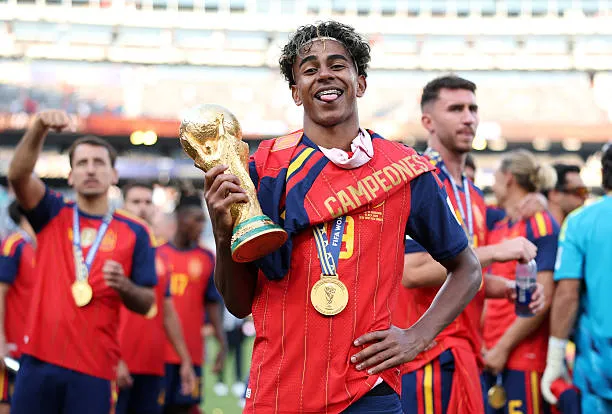
It ended in the 106th minute. Ferran Torres, introduced from the bench, received a header from Nico Williams and rifled the ball past Emiliano Martínez to give Spain the 2026 World Cup. The scoreline was 1-0. The story was more complicated than that, and Africa was threaded through every chapter of it.
Spain finished the tournament having conceded once in eight matches. Argentina, the side that came in having scored 19 goals in seven, left New Jersey without a single shot on target across 90 minutes. Martínez made eleven saves — a World Cup final record — and still could not stop the one that ended Lionel Messi's last dance. The 39-year-old posted on Instagram within hours of the final whistle. The pain is immense, he wrote, and it is going to take time for this wound to heal. It is, in all likelihood, the closing sentence of his World Cup story.
What Africa Built and What It Could Not Hold
The full picture of what African football did at this tournament only sharpens now that the trophy has been handed over. Ten nations qualified — a record for the continent in an expanded field. Nine made the knockout stage. None reached the semi-finals. That tension between breakthrough and familiar ceiling is where the honest accounting begins.
Cape Verde were the tournament's revelation. In their debut World Cup appearance, they held Spain to a draw in the group stage — the only match in which Spain's attack was fully neutralised across the entire tournament. They then took Argentina into extra time in the round of 32 before losing 3-2. The smallest nation at the World Cup, a population of under 600,000, left New Jersey having done more to reshape global perceptions of African football than any single result this side of Morocco in 2022.
Egypt wrote a different chapter. Mohamed Salah's side beat Australia to register Egypt's first ever knockout victory at a World Cup. They then led Argentina 2-0 with eleven minutes remaining in the round of 16 before losing 3-2 in stoppage time. The late collapse reignited conversations about game management that follow African sides from tournament to tournament. But the question is no longer whether Africa belongs at this level. It is whether Africa can close matches that it controls.
Morocco went furthest, reaching the quarter-finals for the second consecutive tournament. DR Congo led England before Harry Kane struck twice. Senegal surrendered a 2-0 lead against Belgium. Five African sides lost after leading — a number that captures both how far the continent has come and the ground it still has to cover.
The Messi Question and Africa's Contribution to the Answer
Spain's control in the final was so total that Argentina did not register a shot in 90 minutes. Enzo Fernández was sent off just before extra time for a second bookable offence, and the ten men were eventually broken. But the shape of Argentina's entire tournament — the comeback identity, the late-goal machinery — had been stress-tested and exposed first by African opposition. Cape Verde and Egypt did not just push Argentina. They wrote the blueprint that Spain eventually finished reading.
Messi ends the tournament with eight goals and four assists, second in the Golden Boot race behind Kylian Mbappé who reached ten and became the all-time World Cup scorer with 22. He has not confirmed whether Sunday was his final game in an Argentina shirt. At 39, with the 2030 World Cup four years away, the mathematics of another campaign are not simple. What is simple is this: the continent that tested him hardest, across two rounds before the final, did not get the credit that outcome deserves. That accounting starts today.
Sport Blot will carry the full continental breakdown — nation by nation, minute by minute — in the days ahead. WAFCON 2026 begins in five days. The shift has already started.