Table of Contents
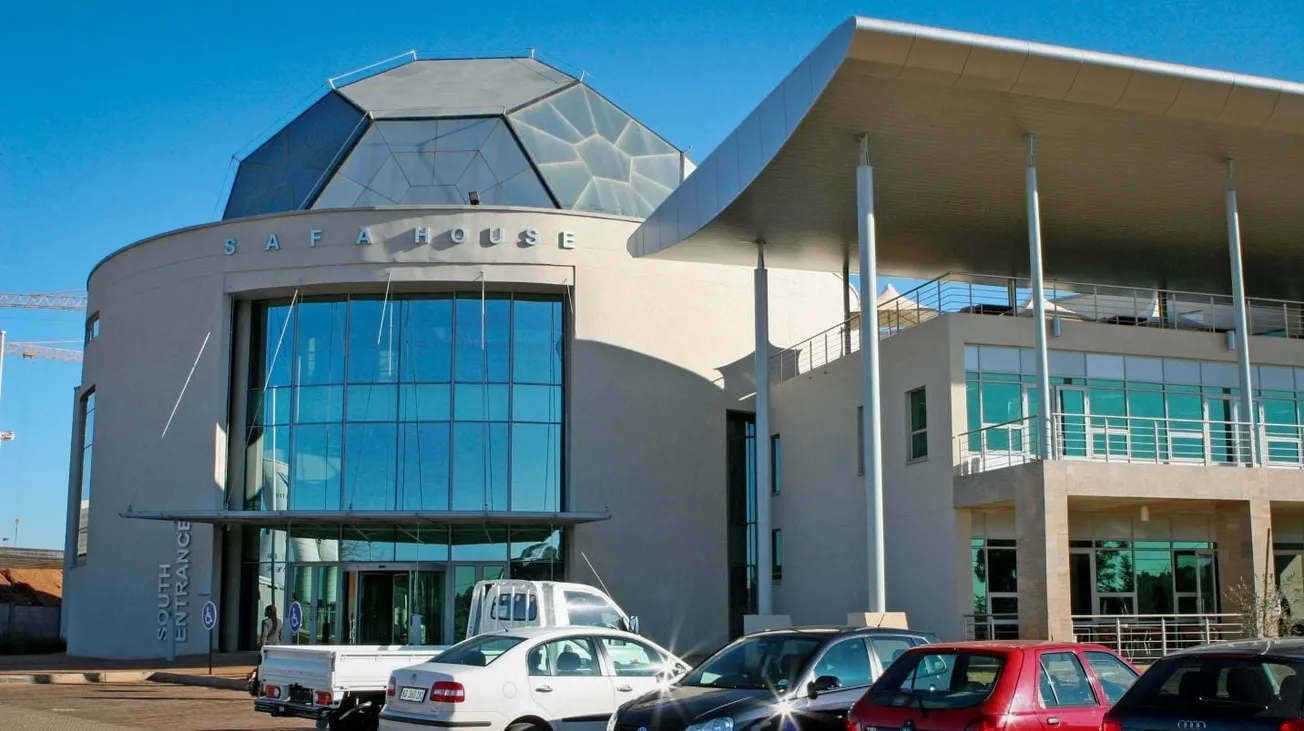
The suspension of four South African Football Association (SAFA) National Executive Committee members following physical confrontations at a March 2026 meeting in Johannesburg has exposed a deepening governance crisis within one of Africa’s most prominent football institutions. What unfolded at SAFA House was not simply an internal dispute. It reflects structural tensions within African football leadership, where boardroom conflicts have escalated into open institutional instability. The suspension of four National Executive Committee members is not just a disciplinary matter. It represents a critical rupture in governance, where internal processes appear unable to contain escalating conflict. The events at SAFA House point to a system under strain, where competing visions for leadership, accountability, and control have collided in full public view. In this moment, South African football finds itself reflecting broader continental challenges around governance, transparency, and institutional authority.
A Federation in Open Conflict
The immediate trigger for the current crisis was a chaotic NEC meeting in March 2026 at SAFA House in Johannesburg. As detailed in a report by SABC Sport, the meeting, which was intended to address governance issues, including financial statements and preparations for the upcoming elective congress, quickly devolved into physical altercations between rival factions.
According to reporting by the Daily News, members were involved in pushing, shoving, and even physical restraint, forcing security to intervene. The confrontation centered on competing motions, one aimed at suspending certain NEC members and another targeting opposition figures within the organization.
The aftermath was decisive. As outlined by SAFA in its official statement dated 28 March 2026, four NEC members, Gladwyn White, Monde Montshiwa, Orapeleng Setlhare, and Emma Hendrick, were suspended pending disciplinary hearings. The association stated that the suspensions were implemented to uphold governance processes and protect institutional integrity.
However, the situation on the ground suggests something far more complex than procedural discipline. It reflects a federation split along ideological and political lines.
Factional Politics and the Fight for Control
At the center of the conflict are two opposing blocs. On one side is the Football Transformation Forum, aligned with SAFA president Danny Jordaan and supportive of his reported intention to seek a fourth term. On the other hand is the Save Our SAFA movement, which has positioned itself as a reformist faction calling for accountability and leadership change.
As detailed by SABC Sport, the suspended members are closely aligned with the Save Our SAFA group, which has been vocal in its opposition to Jordaan’s continued leadership.
The divide is not merely political. It is structural. The meeting itself became a battleground over governance decisions, including financial oversight and electoral processes. The fact that such issues escalated into physical confrontation suggests that internal dispute resolution mechanisms within SAFA are either ineffective or no longer trusted by key stakeholders.
This breakdown is further illustrated by the public statements emerging from both sides.
While SAFA president Danny Jordaan remains central to the factional divide, no direct response from him addressing the suspensions or the allegations raised by the Save Our SAFA faction was available in the cited reports from SABC Sport, Daily News, or other sources at the time of writing. The absence of a public response adds to the perception of a leadership vacuum at a critical moment for the federation.
Voices from the Conflict
The suspended members have not accepted their removal quietly. Instead, they have framed the situation as a broader struggle over governance and accountability.
As reported by Pan Africa Football, Gladwyn White expressed frustration at what he sees as selective intervention from political authorities:“I have written several letters to him, asking him to intervene, and he has not done anything,” he said, referring to Sports Minister Gayton McKenzie.
This statement highlights a key issue. The perceived absence of timely oversight has allowed internal tensions to escalate unchecked.
Monde Montshiwa, in remarks outlined by Sunday World, went further, framing the suspensions as part of a deeper institutional problem:“This is a war…it shall not be ended by a suspension letter.”
Such language is striking. It transforms what should be a governance process into a conflict narrative, suggesting that trust in institutional procedures has collapsed.
Even more telling is White’s broader appeal, also reported by Sunday World, which positions the dispute as a collective struggle for reform:“Together, we can restore transparency, accountability, and integrity in the governance of football.”
These statements are not isolated reactions. They are indicative of a leadership environment where internal legitimacy is contested and where formal structures are no longer sufficient to manage disagreement.
Tactical Breakdown: Governance Failure in Motion
From an analytical perspective, the SAFA crisis can be understood as a failure of governance systems rather than simply a clash of personalities.
First, there is a clear breakdown in procedural control. Meetings intended for decision-making are collapsing before resolutions can be reached. As outlined by Pan Africa Football, the March meeting marked the second time in three months that an NEC sitting failed to conclude.
Second, there is an evident failure of conflict management. Instead of structured debate and voting, disagreements are escalating into physical confrontation. This indicates that internal rules either lack enforcement or are being actively disregarded.
Third, there is a strategic power struggle linked to the upcoming elective congress. Control of the NEC directly influences electoral processes, including the approval of timelines and governance frameworks. This raises the stakes of every decision, turning routine governance into high-stakes political contestation.
Finally, there is the question of external oversight. Sports Minister Gayton McKenzie’s threat to involve international bodies, as described by Daily News, reflects a growing perception that domestic mechanisms may not be sufficient to resolve the crisis.
Historical Context: A Pattern, Not an Exception
While the current events are dramatic, they are not entirely unprecedented within African football governance. Leadership disputes, contested elections, and allegations of administrative irregularities have been recurring themes across several federations over the past decades.
What makes the SAFA situation significant is its visibility and intensity. South Africa has long been viewed as one of the continent’s more stable football administrations, particularly given its role in hosting the 2010 FIFA World Cup. The current crisis, therefore, represents not just a local issue but a shift in perception.
When a federation with such institutional history experiences open conflict at this level, it signals that governance challenges are not confined to less established systems. They are systemic.
What This Means for the Continent
The SAFA governance crisis ultimately reflects broader questions about governance across African football.
First, it highlights the fragility of institutional structures when leadership legitimacy is contested. Without trusted mechanisms for dispute resolution, even established federations can descend into instability.
Second, it underscores the growing tension between continuity and reform. Long-serving leadership can provide stability, but it can also generate opposition if accountability mechanisms are perceived to be weak.
Third, it raises concerns about international perception. As African football continues to compete on the global stage, governance crises risk undermining credibility, not just for individual associations, but for the continent as a whole.
The potential involvement of CAF and FIFA, as suggested by the Sports Minister, illustrates how quickly domestic issues can escalate into continental and global concerns.
A Defining Test for Governance
The suspension of four NEC members is not the resolution of SAFA’s crisis. It is only the beginning of a deeper confrontation over power, accountability, and the future direction of the federation.
What this moment reveals is clear. Governance in African football cannot rely solely on formal structures. It requires legitimacy, transparency, and the ability to manage conflict before it becomes a crisis.
South Africa now faces a defining test. Whether SAFA can navigate this period without further institutional damage will determine not only its own future but also its standing as a model for governance on the continent.
Because in the end, this is not just a South African story. It is a reflection of the challenges and the possibilities, shaping African football today.