Table of Contents
The Democratic Republic of Congo will carry Africa’s final World Cup hopes into the inter-confederation playoffs after a dramatic and hard-fought qualification campaign that has already reshaped perceptions of the continent’s football hierarchy. Their journey has not only eliminated traditional giants but has also highlighted a broader shift in African football, where structure, planning, and resilience are beginning to outweigh reputation.
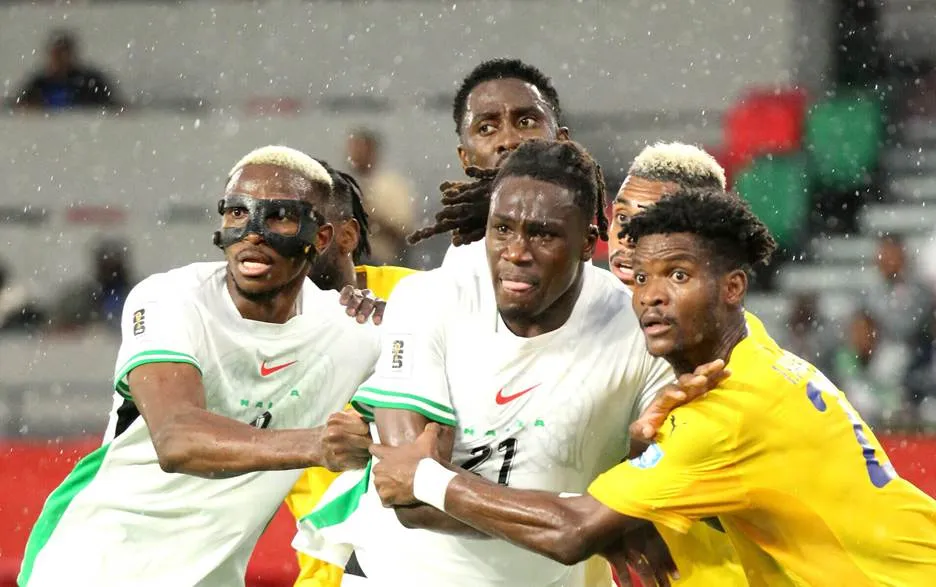
DR Congo’s place in the playoffs was secured through a tense and defining victory over Nigeria, one of Africa’s most established football powers. According to reporting by BBC Sport, the match ended 1-1 after extra time before DR Congo triumphed 4-3 on penalties, with captain Chancel Mbemba converting the decisive kick. The result sent the Leopards into the final intercontinental stage and condemned Nigeria to a second consecutive World Cup absence.
The match itself reflected the balance of the contest. Nigeria struck early through Frank Onyeka, but DR Congo responded through Meschack Elia, leveling the game and gradually asserting control. As reported by Al Jazeera, the Congolese side grew into the match, dominating possession and creating the clearer chances as the game progressed.
Tactical Discipline and Key Moments Define DR Congo’s Victory
The penalty shootout that followed captured the fine margins at this level. BBC Sport notes that substitute goalkeeper Timothy Fayulu, brought on specifically for penalties, made the crucial save from Semi Ajayi before Mbemba sealed the victory. It was a moment that underlined both tactical preparation and composure under pressure.
The aftermath of the match drew global attention. Nigeria head coach Éric Chelle attributed the defeat to external factors, claiming unusual behavior from the opposing bench. “During the penalty shootout, the guy from Congo did some voodoo. Every time,” he said, as reported by ESPN. While the comments reflected frustration, they also shifted focus away from the more substantive reasons behind DR Congo’s success.
A more grounded assessment came from within the Congolese camp. “The team spirit remained high and we chose to try and control the game… overall, I think we deserved the victory,” said head coach Sébastien Desabre, as outlined by The Guardian.
Beating Cameroon and Nigeria: A Statement Qualification Run
That victory over Nigeria was not an isolated achievement. DR Congo had already defeated Cameroon in the semifinal of the African playoffs, with Mbemba scoring a late winner to secure a 1-0 victory, as reported by BBC Sport.
Eliminating two of Africa’s most successful football nations in succession represents one of the most significant qualification runs on the continent in recent years.
Their broader qualification campaign further reinforces this trajectory. According to ESPN analysis, DR Congo narrowly missed automatic qualification after finishing just two points behind Senegal in their group.
Defensively, they were among the most organized teams in the qualifiers, conceding only six goals across ten matches, while also recording multiple clean sheets. These numbers reflect a team built not on individual brilliance alone, but on tactical cohesion.
Sébastien Desabre’s Long-Term Project Pays Off
This transformation can largely be attributed to the leadership of Sébastien Desabre, who has spent three years reshaping the squad. ESPN reports that a significant portion of the current team has been integrated during his tenure, including players drawn from the Congolese diaspora across Europe.
This recruitment strategy has expanded the talent pool while maintaining a unified tactical identity.
The importance of stability becomes even clearer when contrasted with Nigeria’s experience. During the same period, Nigeria cycled through multiple coaching regimes, a lack of continuity that ultimately undermined their campaign. DR Congo’s progress, in this sense, is as much about long-term planning as it is about on-field execution.
DR Congo’s Place Secured: From Playoff Tension to World Cup Reality
The uncertainty surrounding the inter-confederation playoffs has now been resolved. DR Congo are no longer preparing for a decisive tie, they have already secured their place at the 2026 FIFA World Cup.
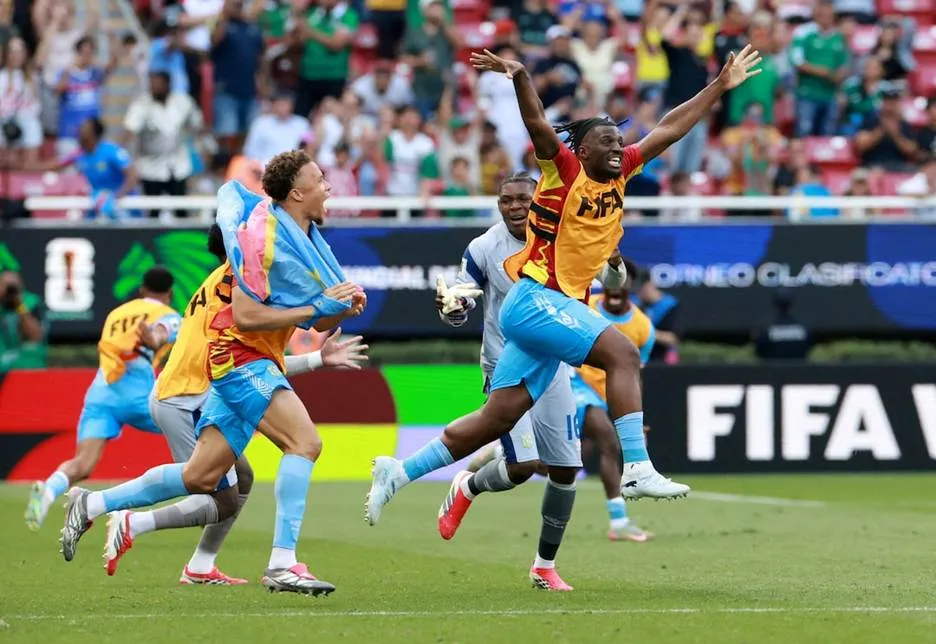
As reported by Al Jazeera, the Leopards defeated Jamaica 1-0 in the intercontinental playoff final on March 31, 2026, in Guadalajara. Defender Axel Tuanzebe scored the winning goal in extra time, sealing a historic qualification and ending a 52-year absence from the tournament.
Rather than facing further playoff opposition, DR Congo now turn their attention to Group K, where they will meet Portugal, Colombia, and Uzbekistan. The shift is significant: from navigating high-pressure knockout football to preparing for a global stage where tactical discipline will be tested against varied styles—from European structure to South American fluidity.
The narrative has changed. DR Congo are no longer chasing qualification. They are preparing to compete.
DR Congo’s World Cup Return: A 52-Year Wait
Beyond results, DR Congo’s qualification carries a profound historical weight. The nation has not appeared at a FIFA World Cup since 1974, when it competed as Zaire—a different name, a different era, and almost a different sport.
More than half a century has passed since that tournament in West Germany. In football terms, it spans generations: from an age before modern tactics, global broadcasting, and the commercialization of the game, to today’s data-driven, hyper-competitive landscape. Entire footballing identities have risen and fallen in that time.
For DR Congo, the absence has been defined by instability, missed opportunities, and near-misses. For supporters, it has been a long wait carried across decades—parents to children, one generation passing down the memory of 1974 as history rather than experience.
This qualification changes that. It reconnects the present with a distant past and gives a new generation of Congolese players the chance not just to participate, but to redefine what their nation represents on the global stage.
What DR Congo’s Run Means for African Football
At a continental level, DR Congo’s rise signals a shift in African football’s competitive balance. Traditional powers such as Nigeria and Cameroon are no longer guaranteed success, while emerging teams are closing the gap through better organization and long-term planning.
This shift reflects both progress and pressure. On one hand, it demonstrates the growing depth of talent within African football. On the other, it exposes the consequences of instability among historically dominant nations.
DR Congo at the World Cup: What Comes Next
The question is no longer whether DR Congo will be at the 2026 World Cup. They will. It is what they intend to do once they get there. Group K — Portugal, Colombia, Uzbekistan — presents a range of styles and pressures that African qualification cannot fully prepare a team for. Portugal bring European technical quality. Colombia bring South American physicality and creative unpredictability. Uzbekistan, as the group’s other emerging side, offer no guaranteed points.
What DR Congo have shown across this qualification campaign is that defensive organisation and collective belief are enough to eliminate the continent’s giants. Whether those qualities translate to the global stage is the next test. But a nation that last appeared at a World Cup in 1974 — under a different name, in a different era of the game — does not arrive in 2026 simply to take part. Fifty-two years is too long a wait for that.